A factory that can prove its work.
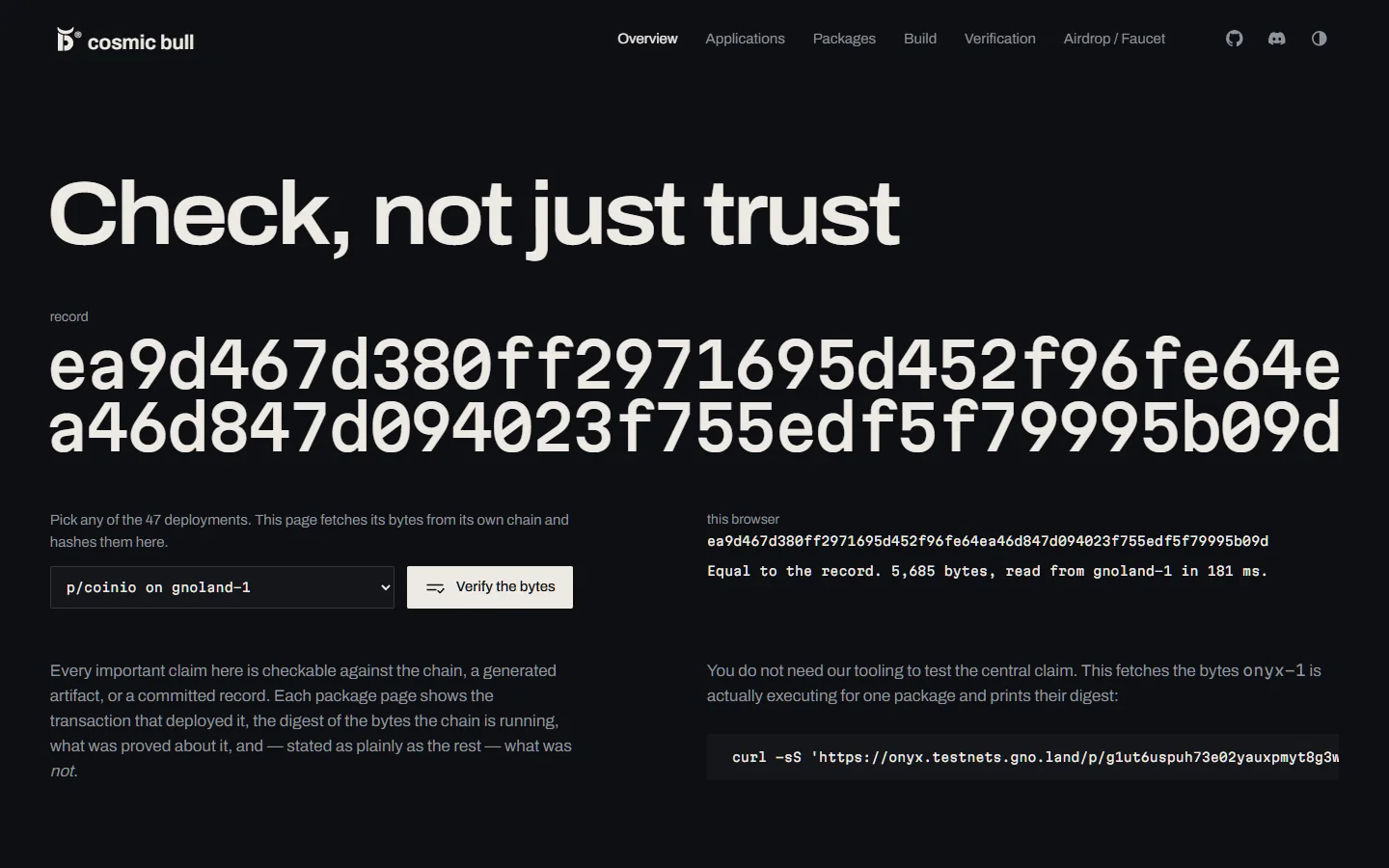
Cosmic Bull builds open on-chain software on gno.land. On 24 October 2026 that was 28 complete on-chain applications and the 14 packages they are composed from. The job was a redesign and a new logo. Their copy, as it stood that day, moved across word for word. Their central claim, that every deployment can be checked against the chain, sat in a curl command about four fifths of the way down the old page. On a desktop the first screen now runs that check; on a phone it sits just below the fold.
A crescent on a bowl.
The sign is a c laid open upward as horns, seated on the bowl of a b. Those are the client’s two initials, and a crescent on a round bowl also reads as Taurus. It is three parts on a 24-unit grid, with the name beside it in Archivo. The same drawing serves the browser tab at 32 and 16 px.
A bull written in its own code.
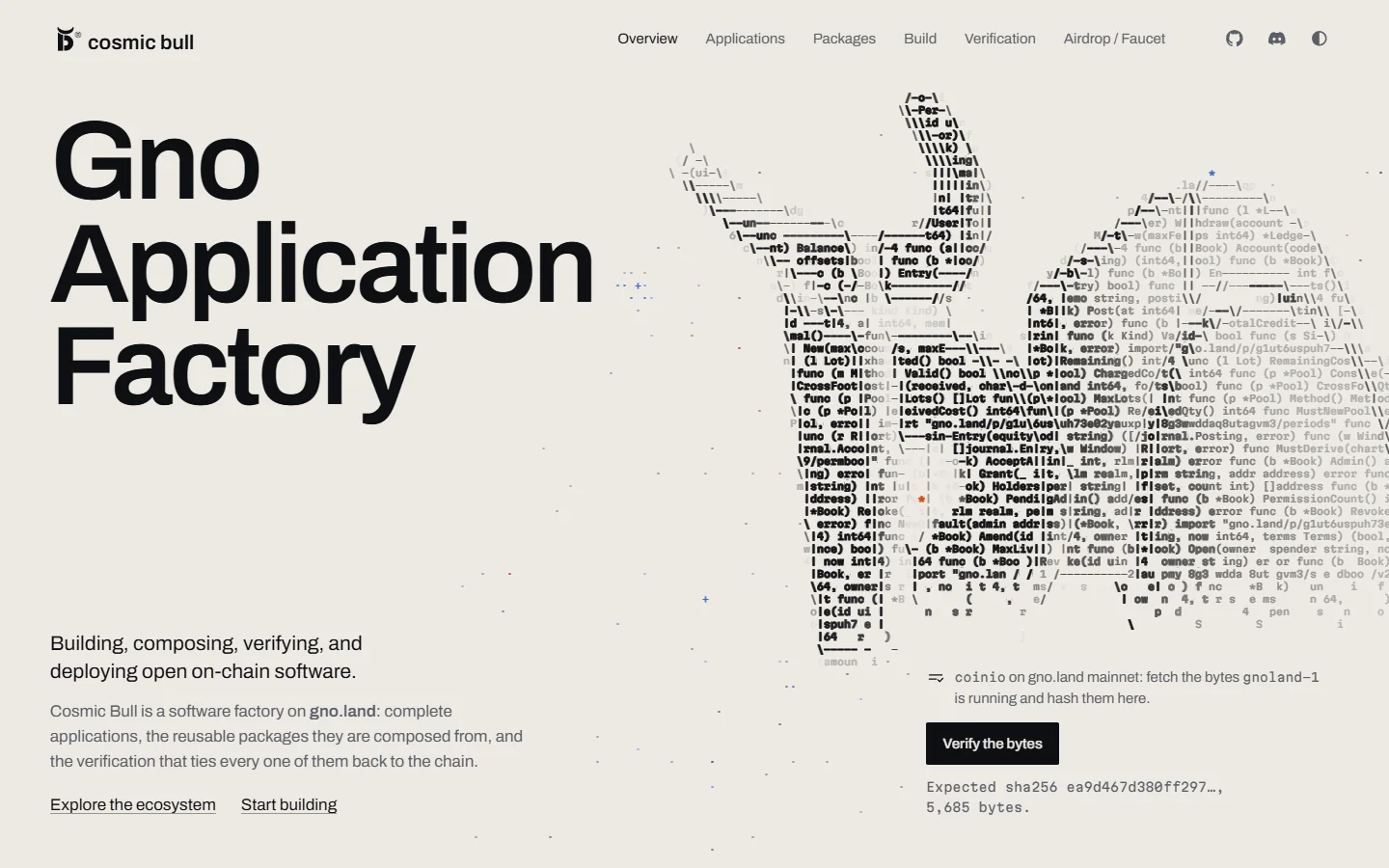
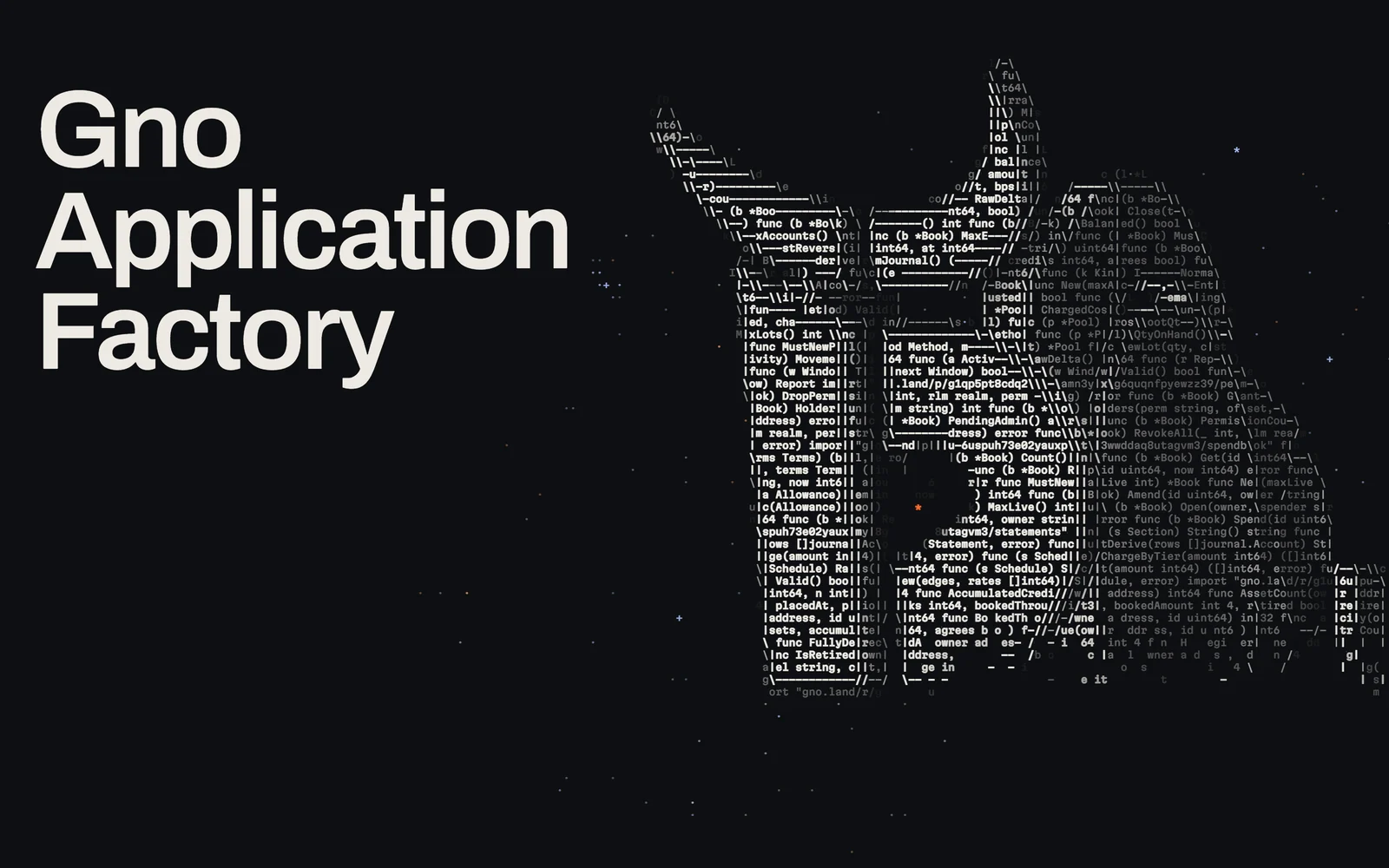
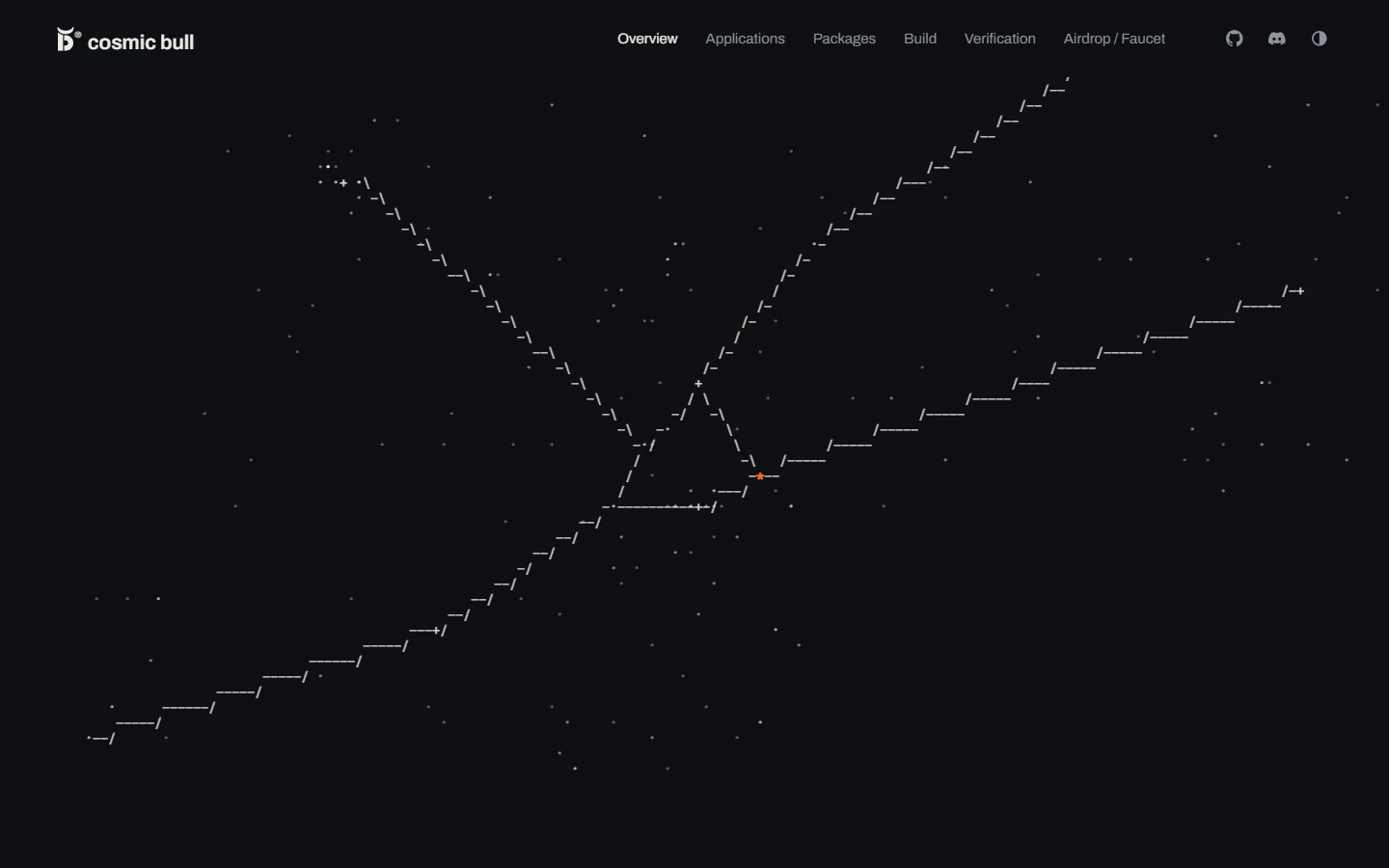
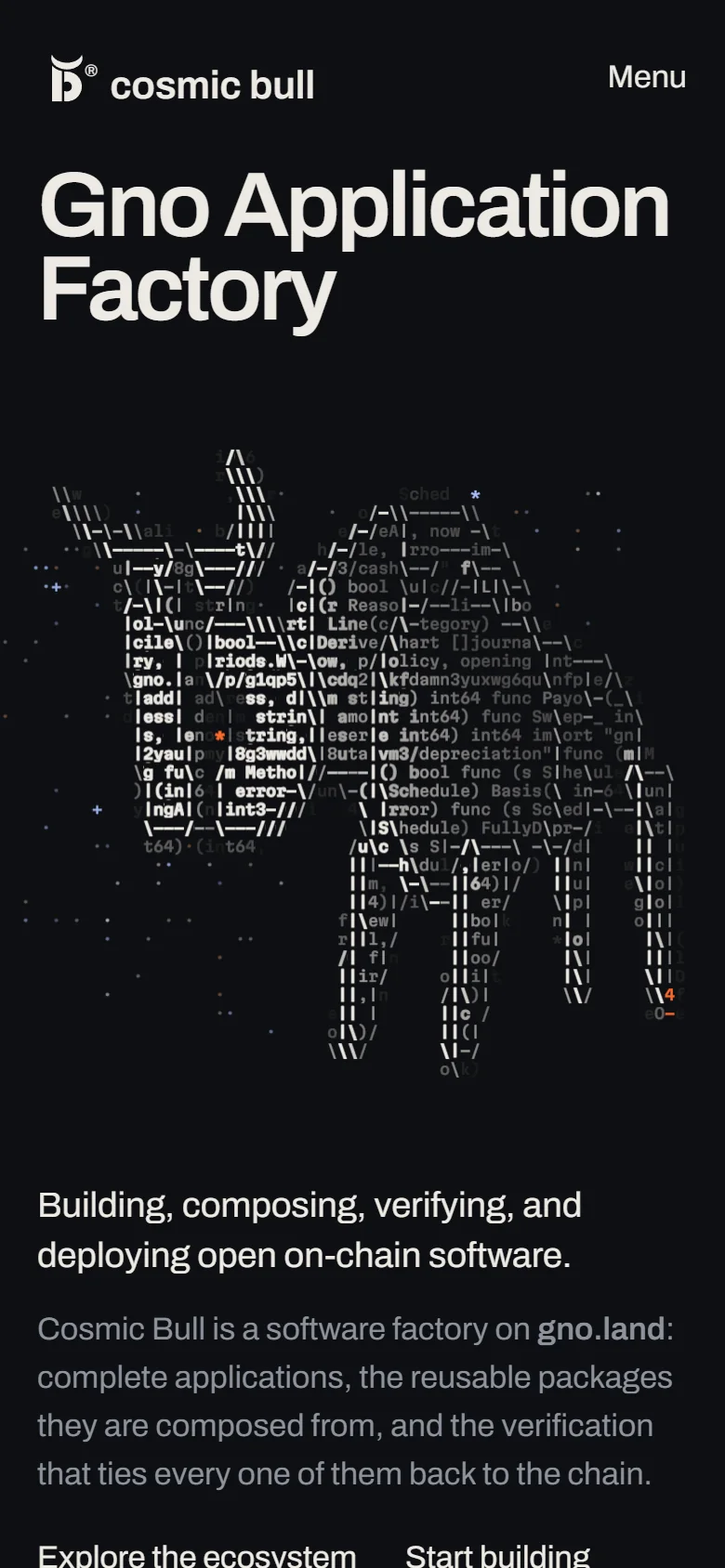
The hero is a bull under the real stars of Taurus, down to magnitude 6.5, with Aldebaran on its eye. Every lit cell is a character of the client’s own packages: their import paths and exported APIs. On load the headline locks, the parts fly in as dim noise and a hot front runs out from the eye and locks the figure. One hot cell stays.
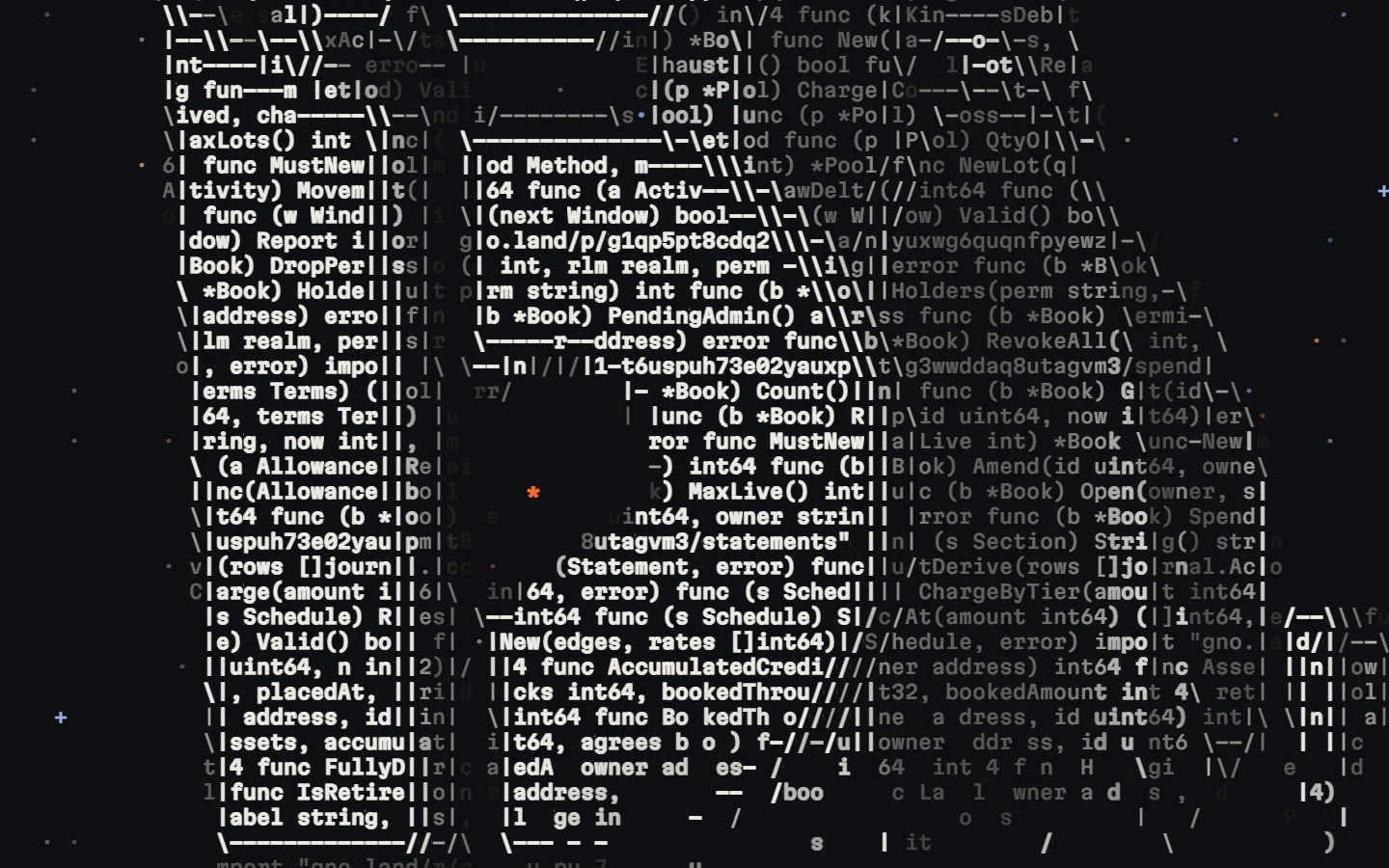
It answers the cursor.
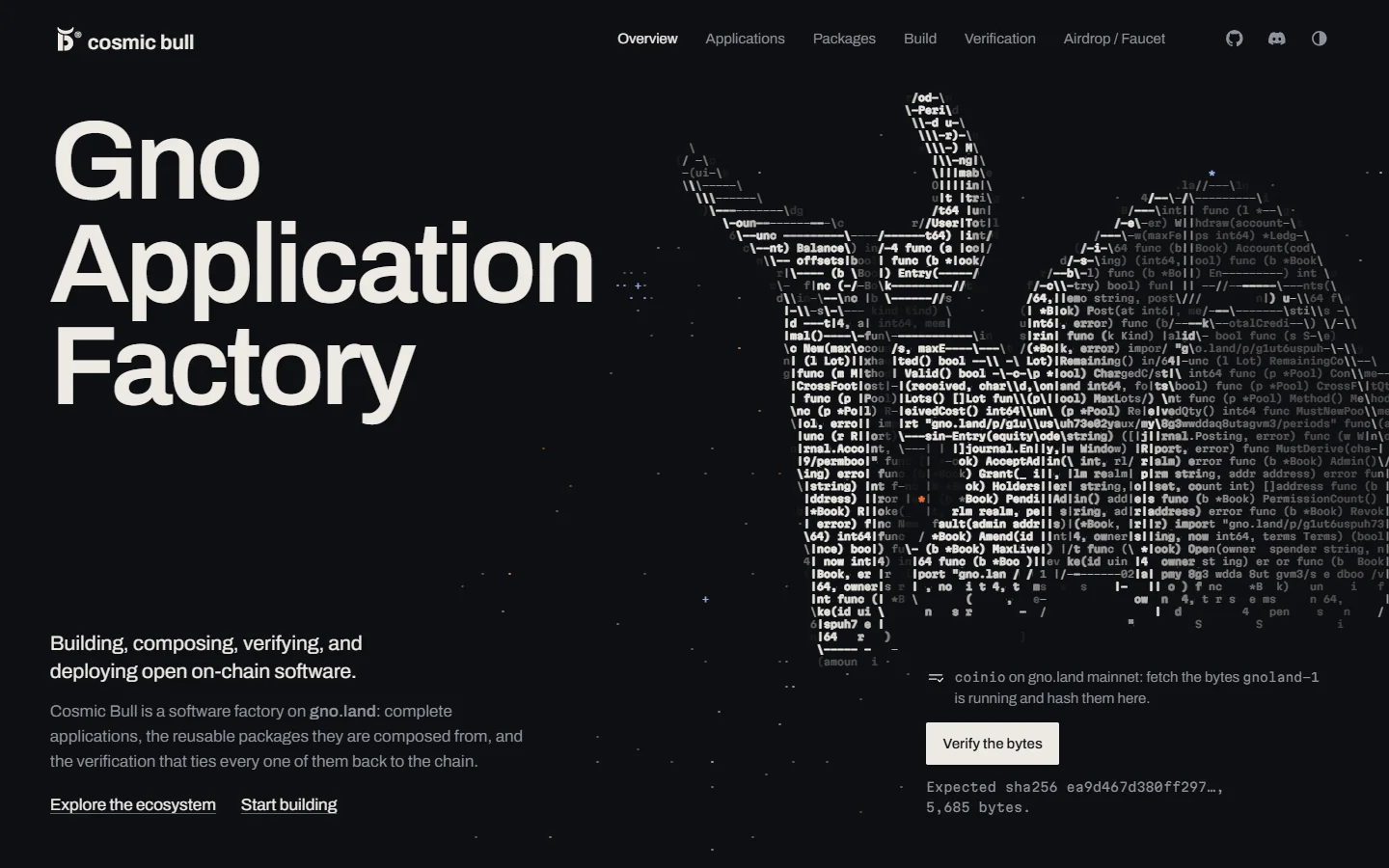
Each part of the bull is one of the packages. Under the cursor a part turns to its package’s name while the rest step back, and a click opens that package’s page. A drag turns the bull, which coasts to a stop and eases back into its sway. The rows of the catalog answer in the same way, and the theme wipes down the page in 700 ms while every drawing redraws for day.
Six words, six drawings.
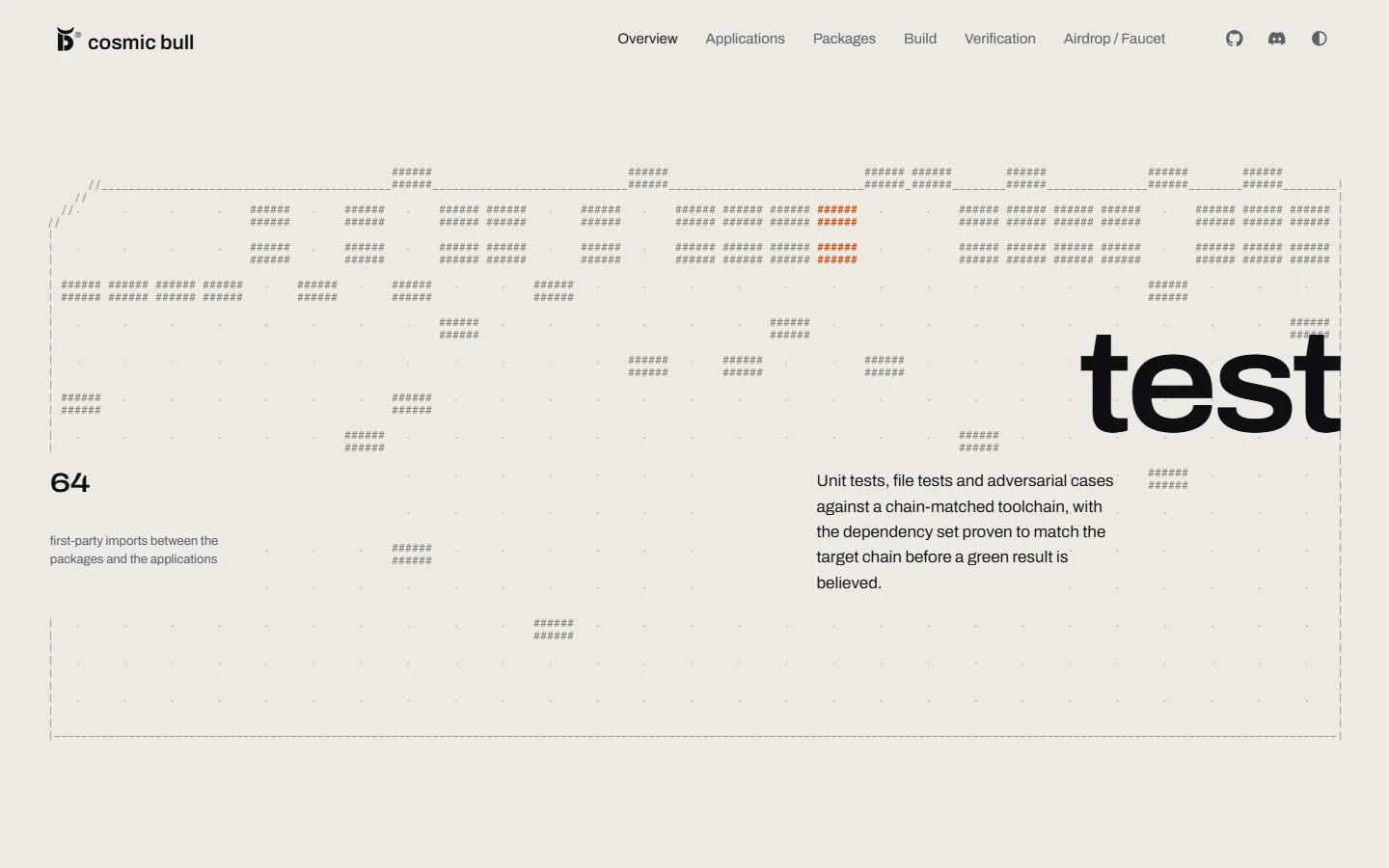
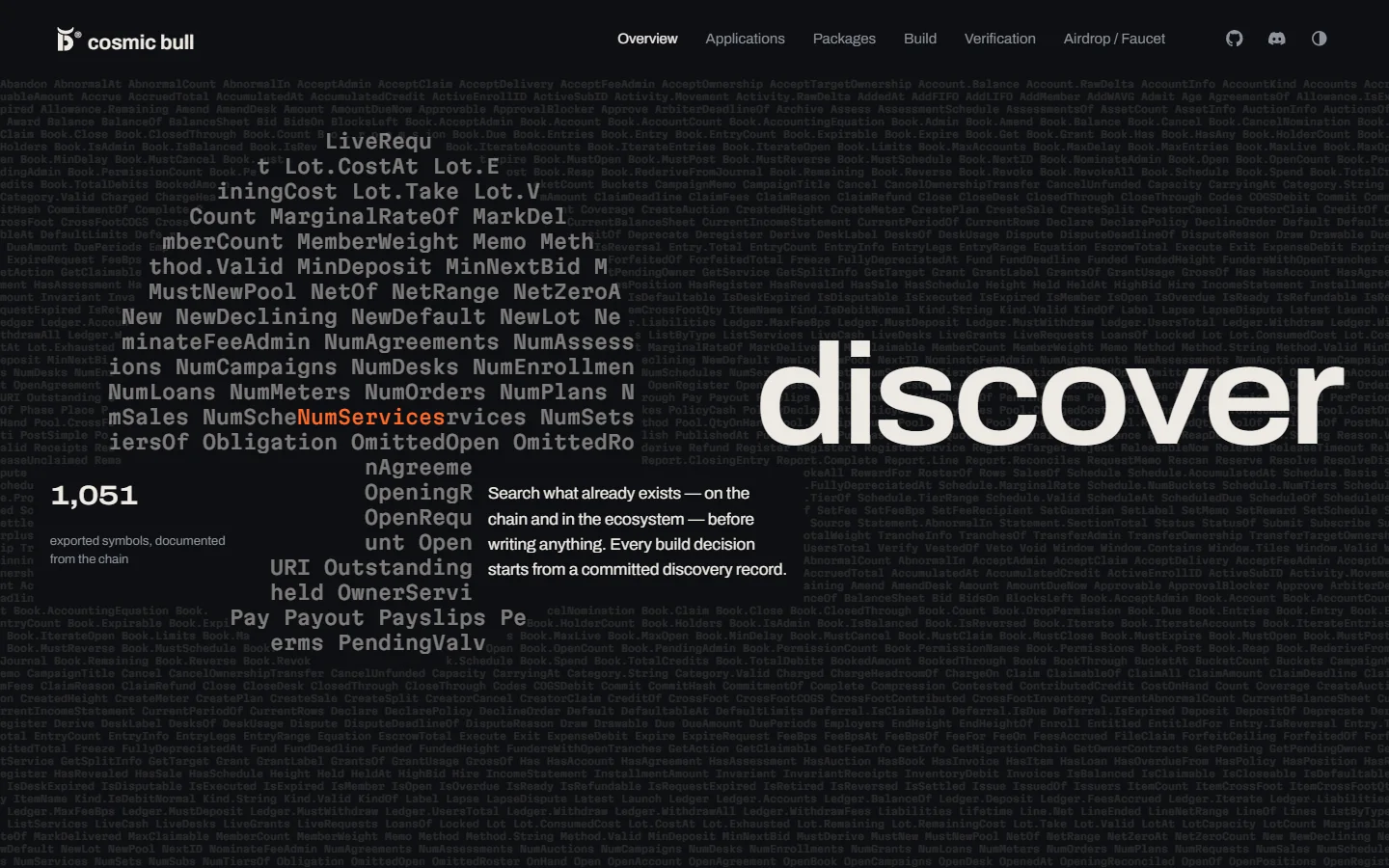
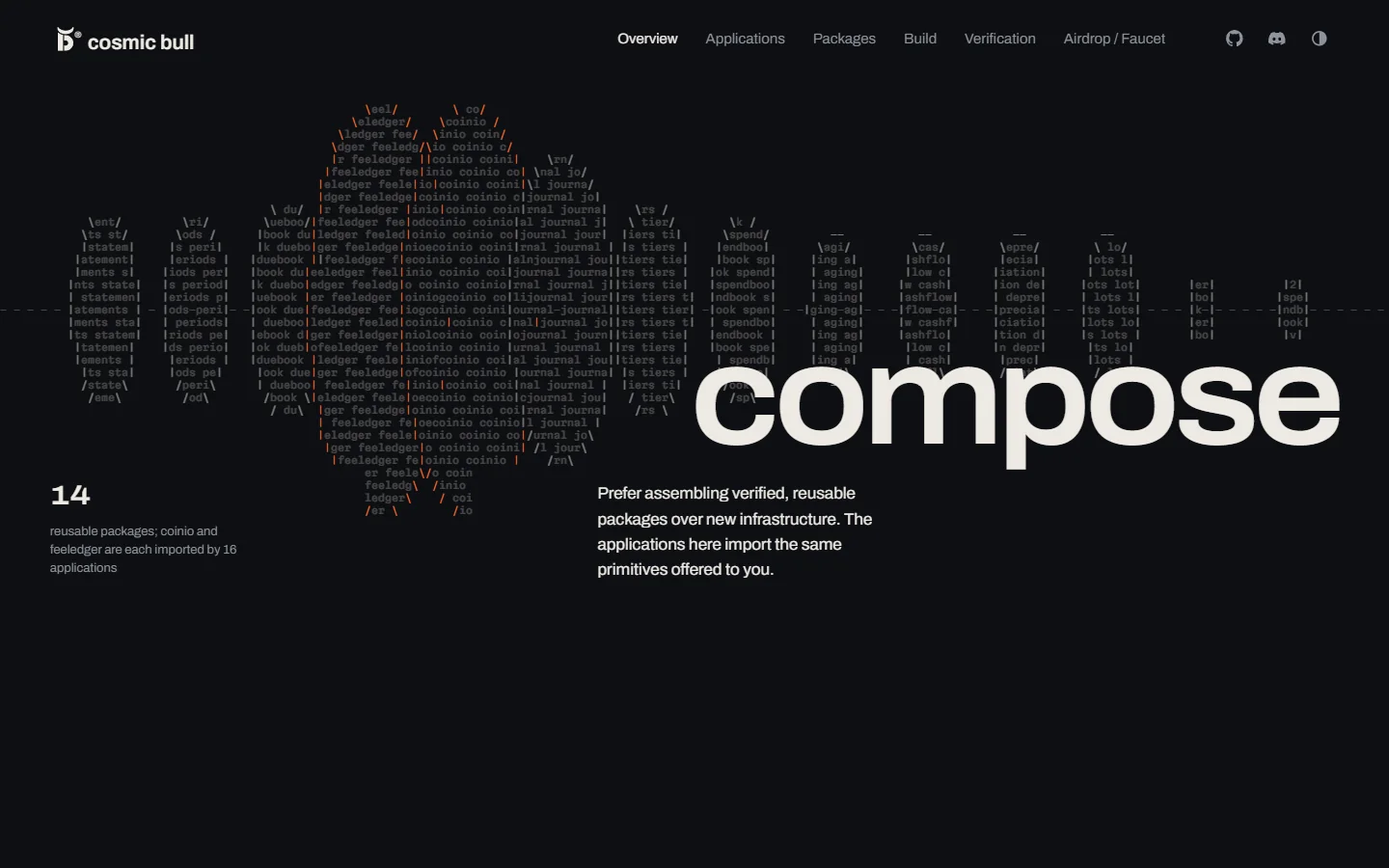
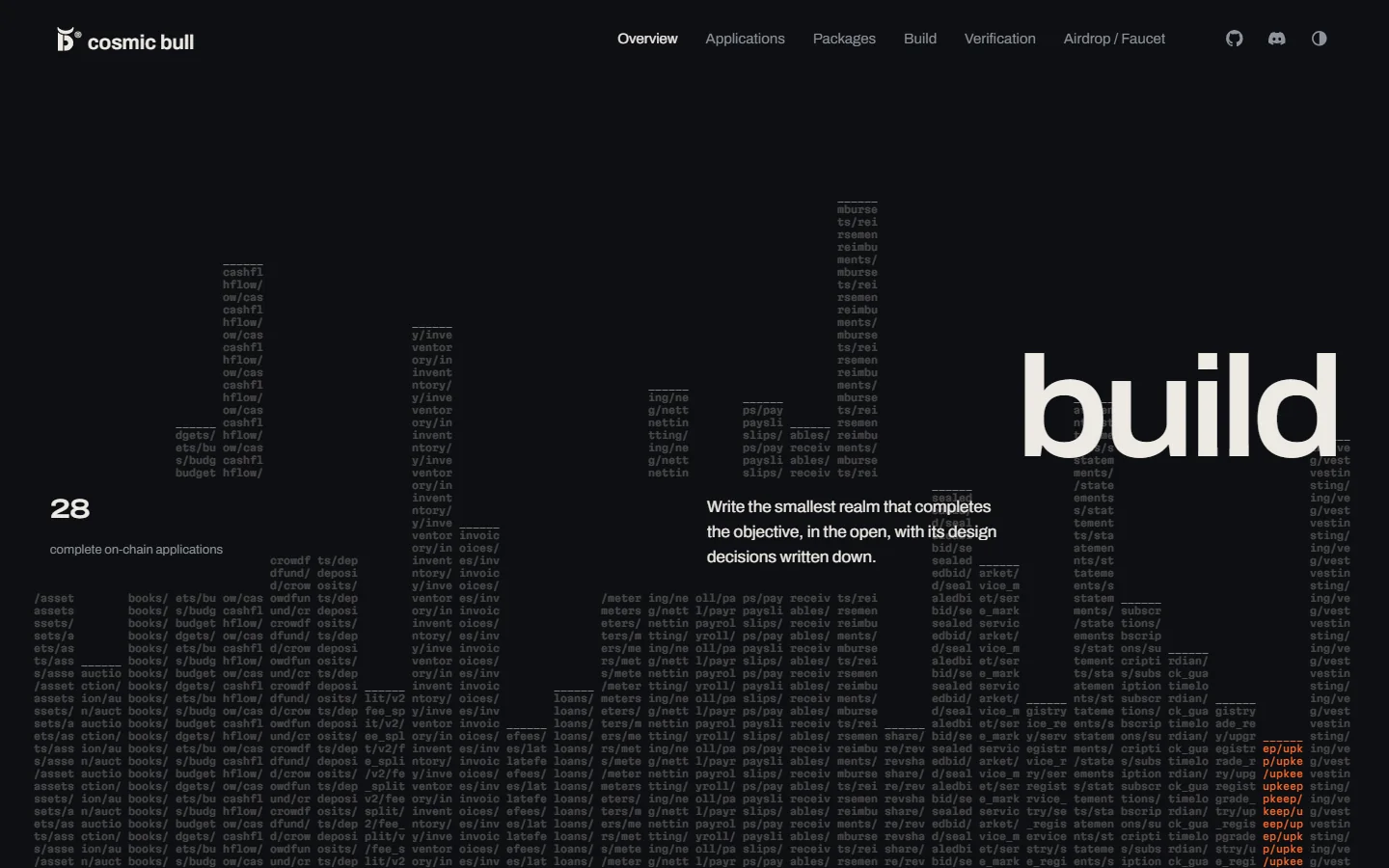
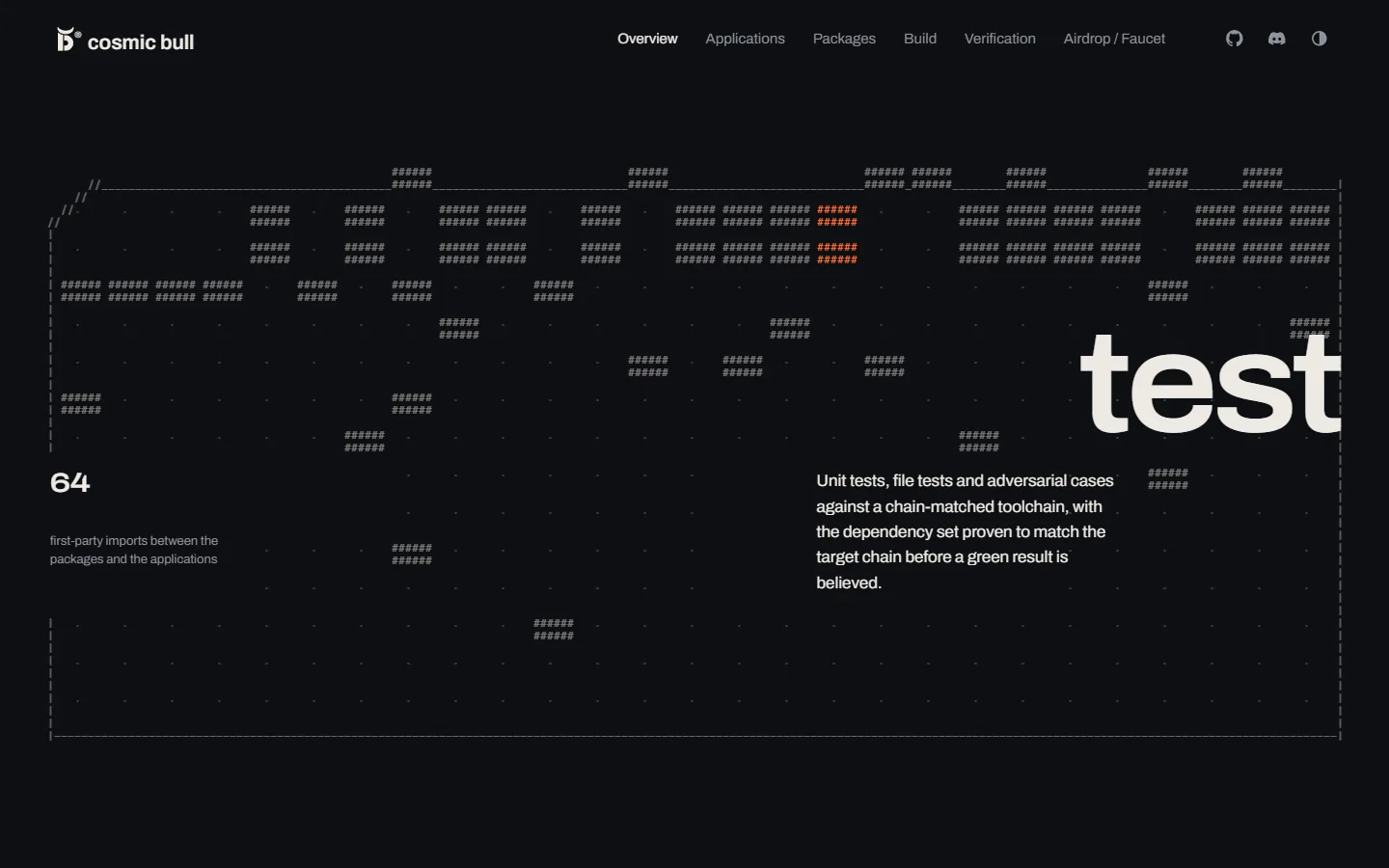
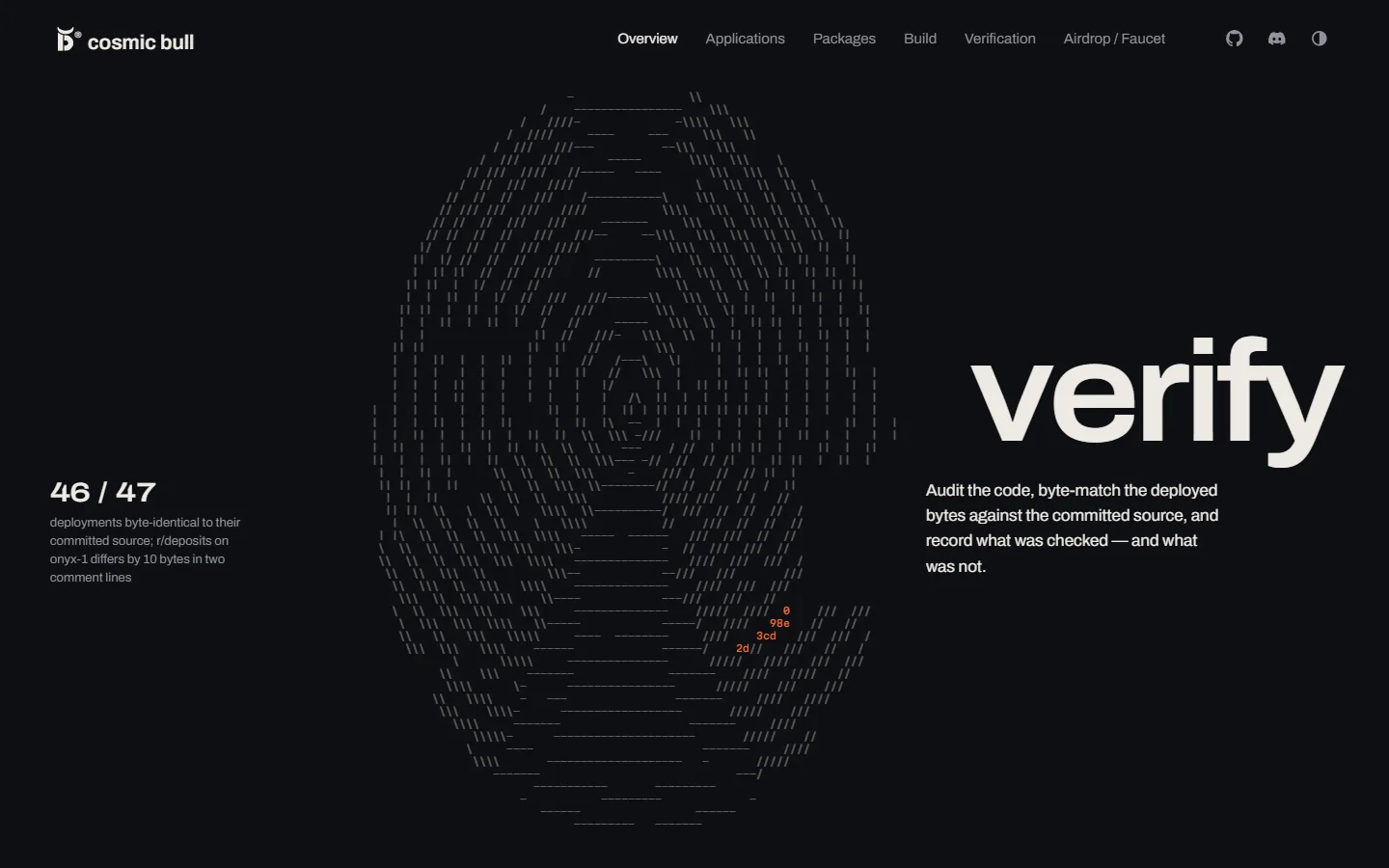
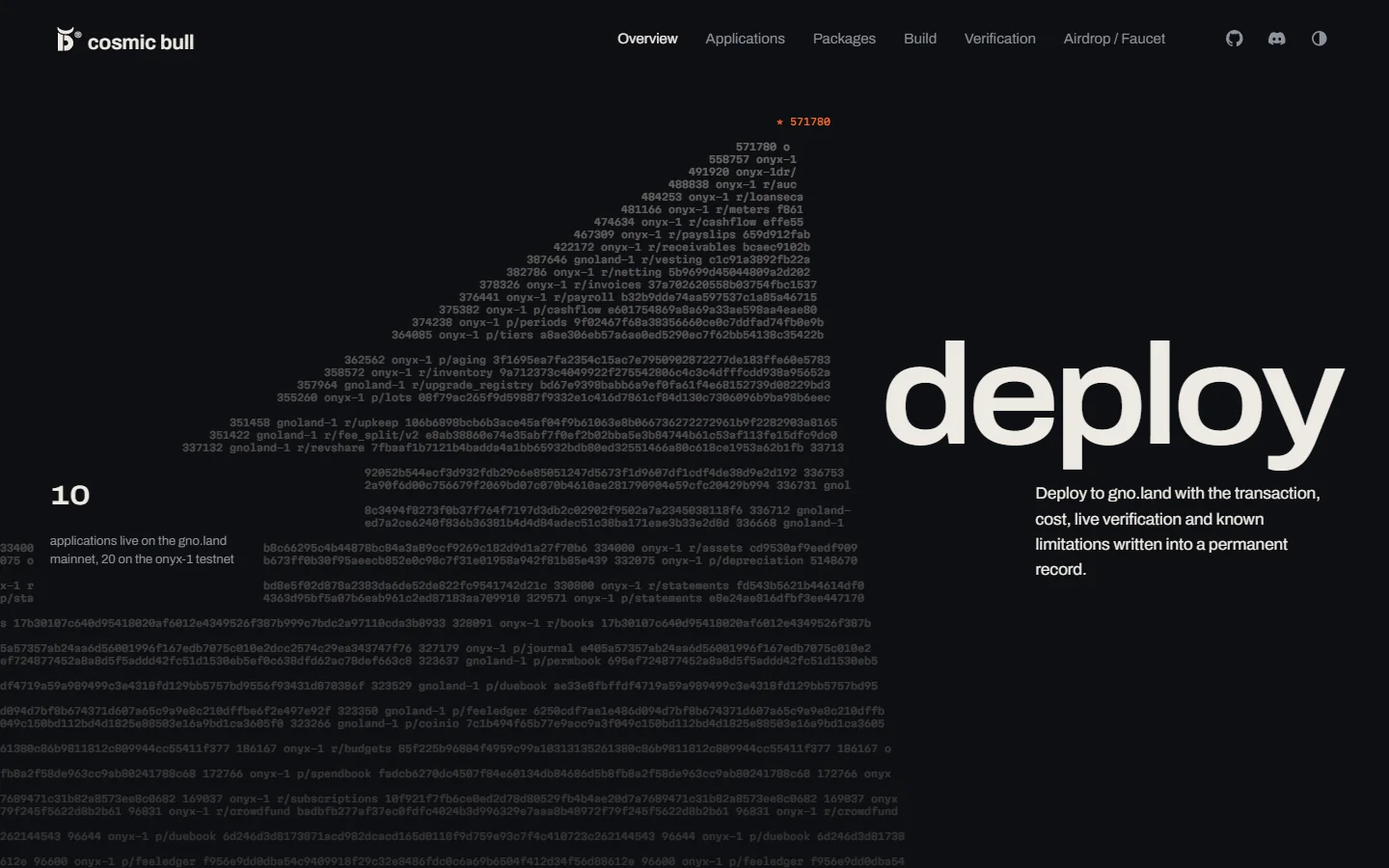
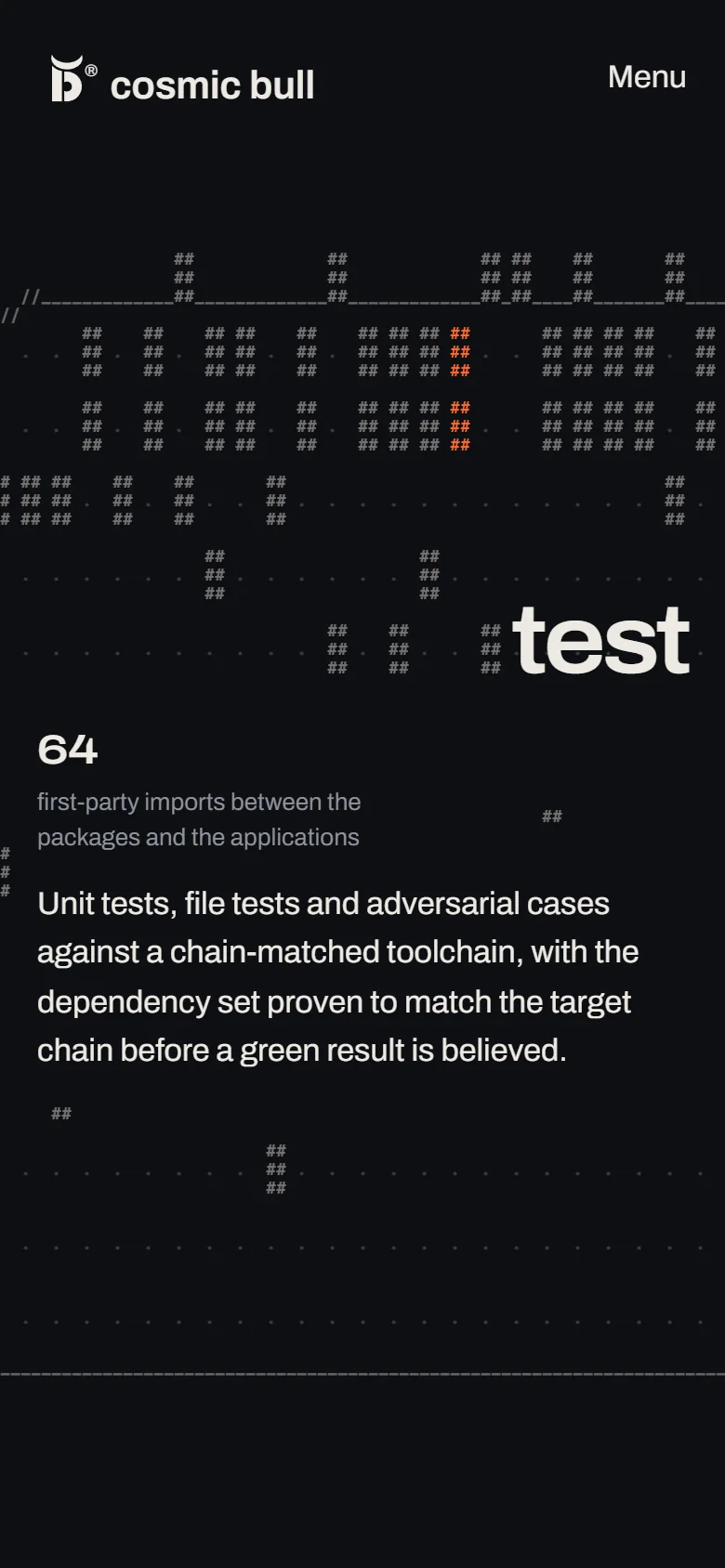
Discover, compose, build, test, verify, deploy: the client’s lifecycle, one word at a time at display size. Each word has a drawing made from real records, and one number from those records beside it.
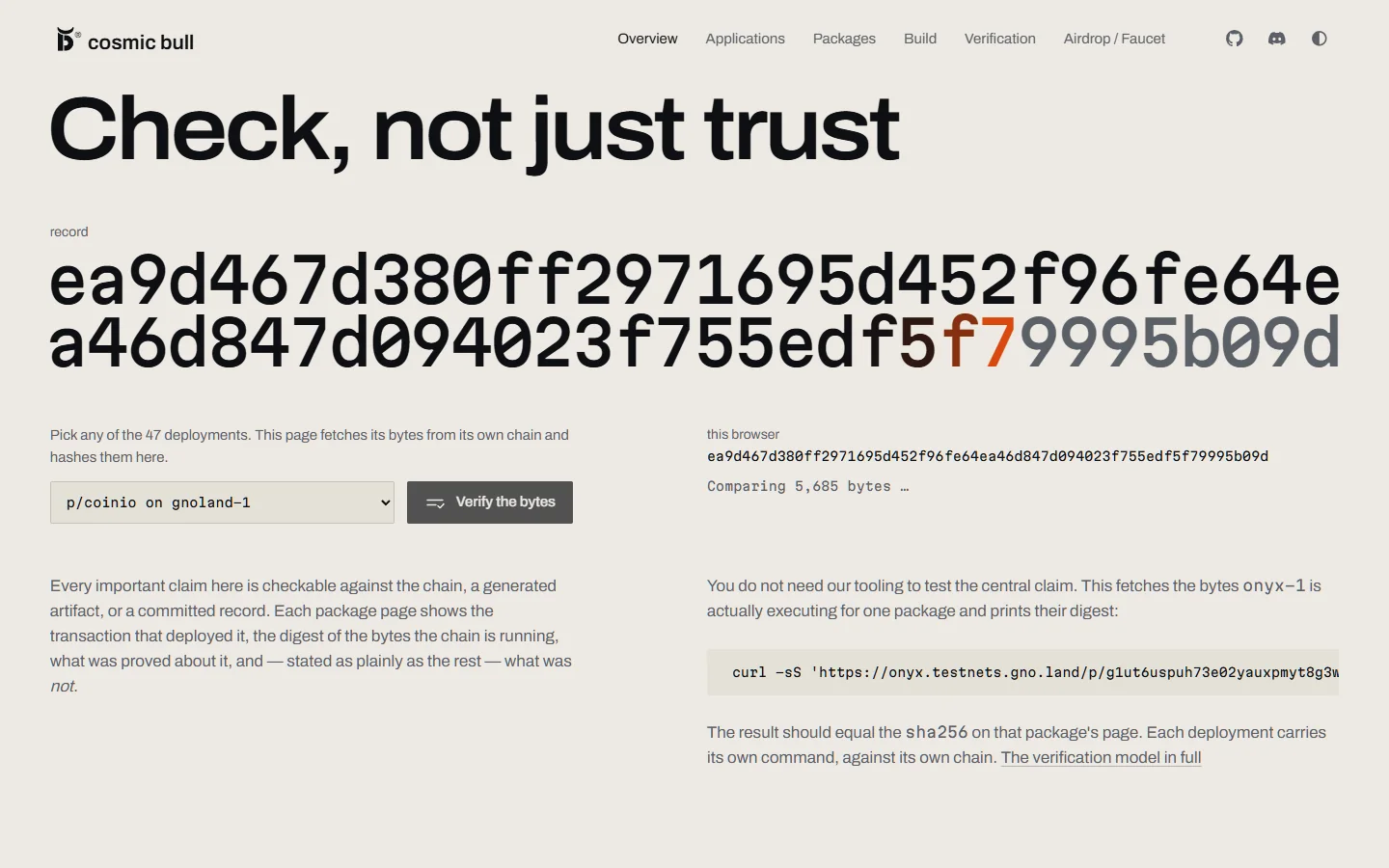
The proof runs in your browser.
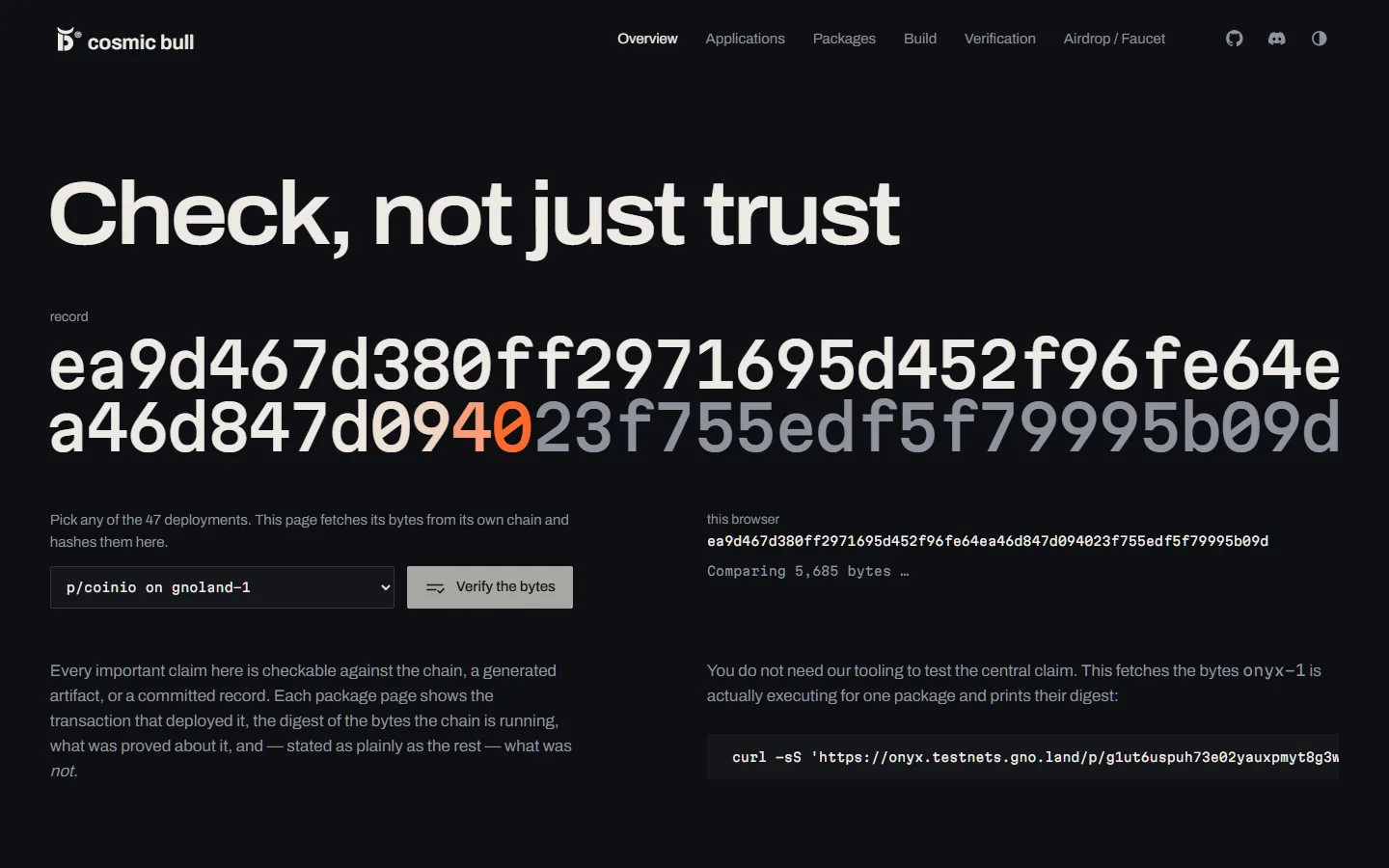
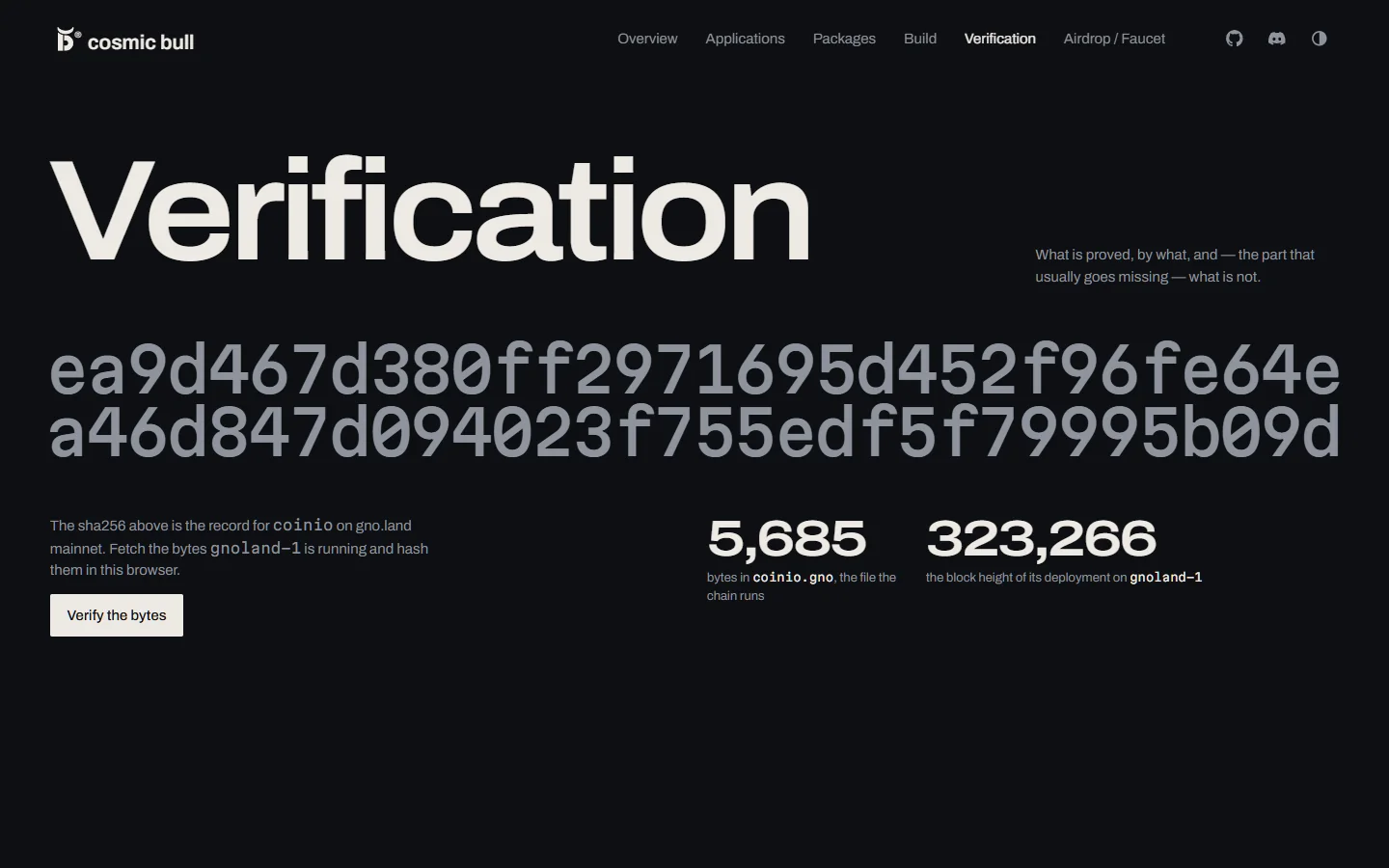
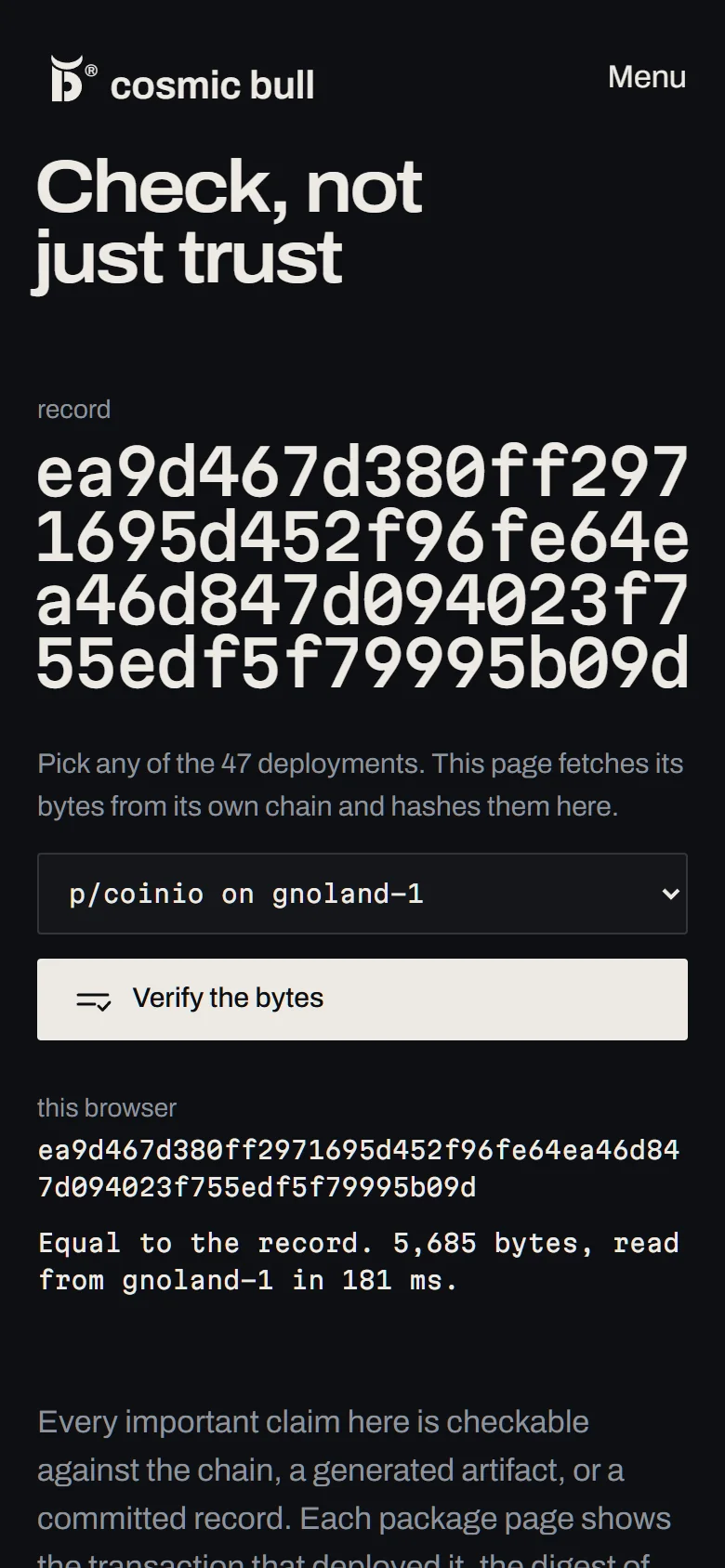
Verify the bytes fetches what the chain is running and hashes it on the visitor’s own machine. The digest stands at display size and locks one character at a time, steel to bone, 28 ms apart. A visitor can pick any of the 47 deployments. 46 match their source byte for byte, and the record names the one that differs, by 10 bytes in two comment lines. Failure is written out too: if the chain can’t be reached, the page says nothing was checked. It never shows a simulated success.
Reference pages a developer can read.
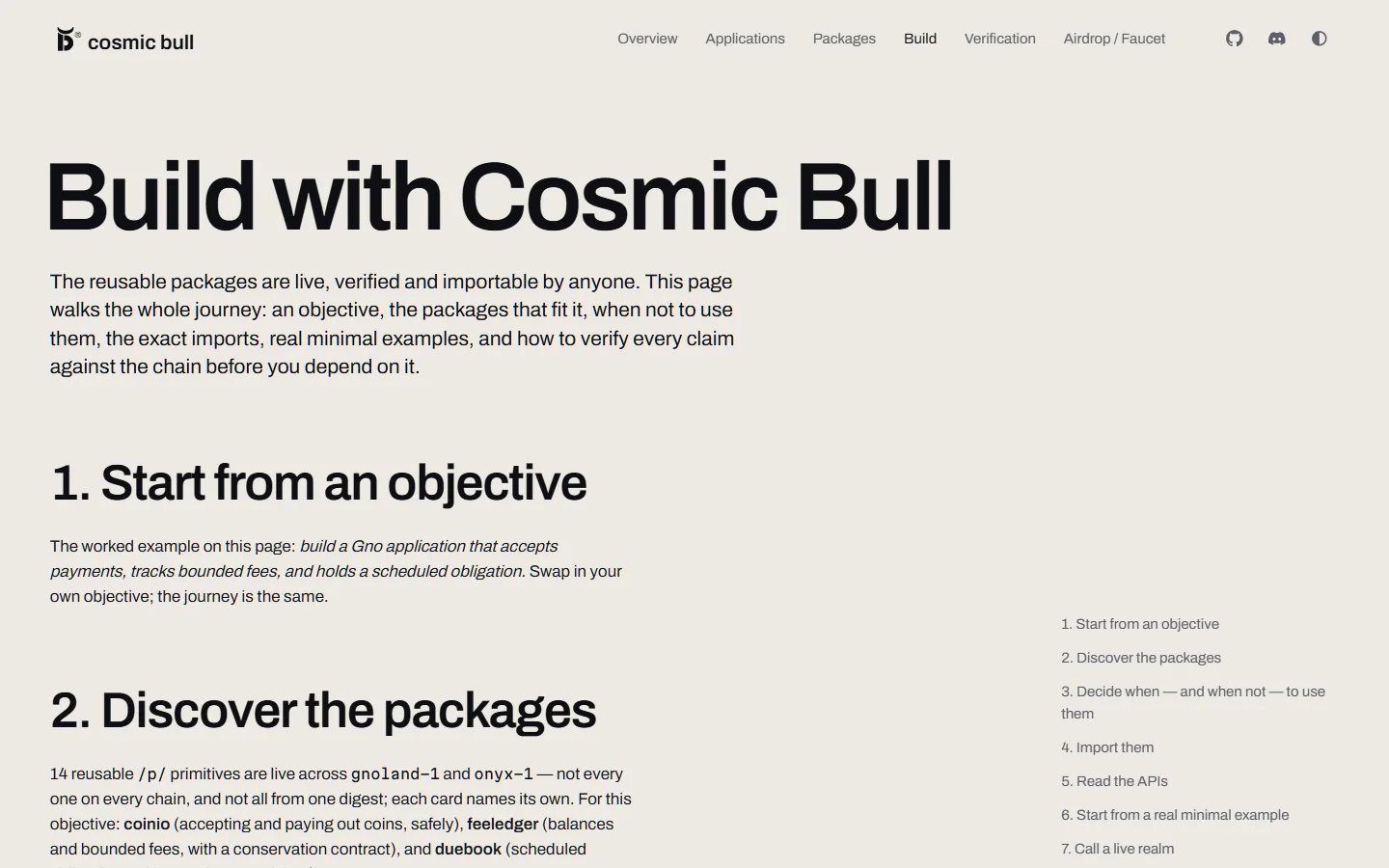
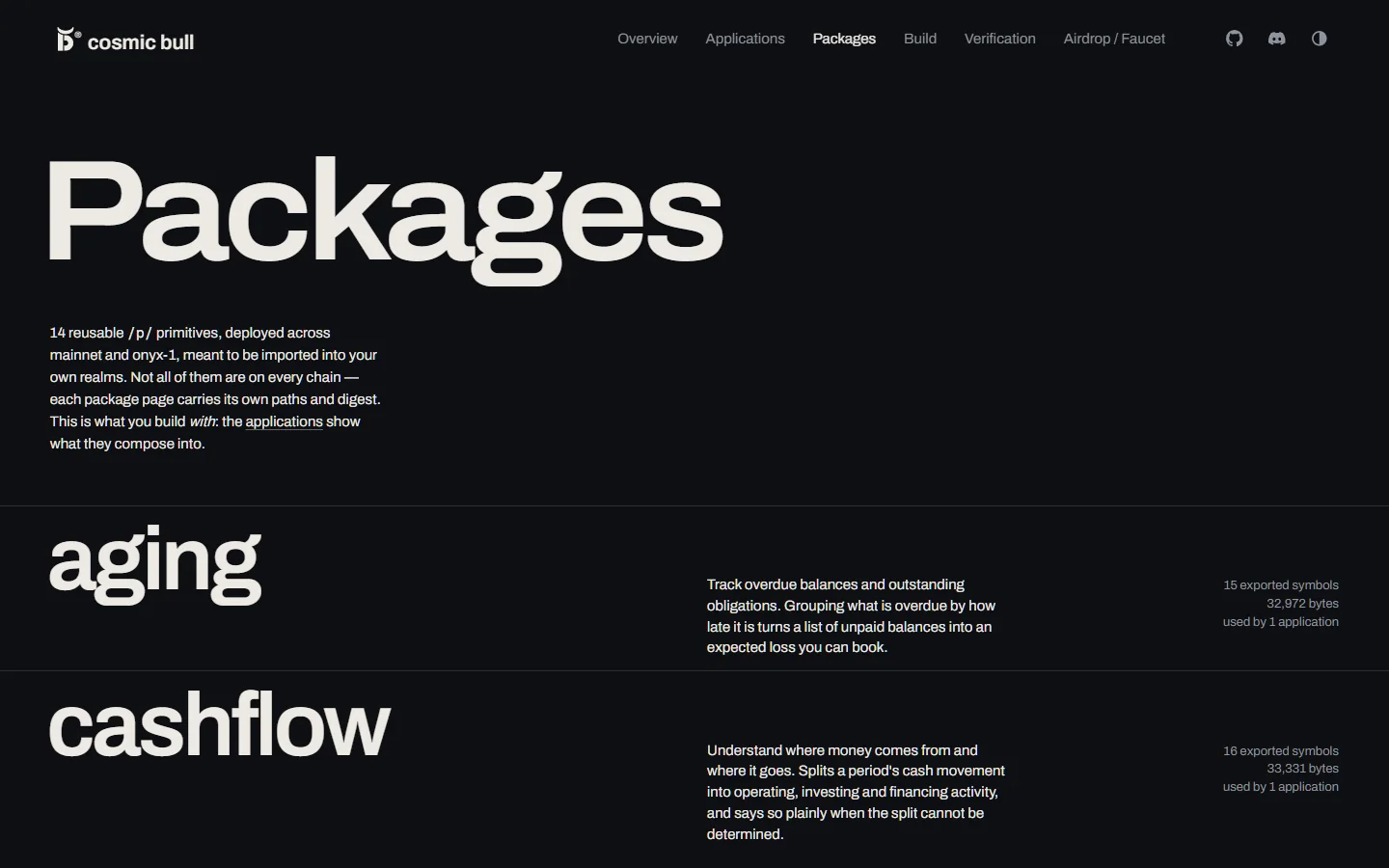
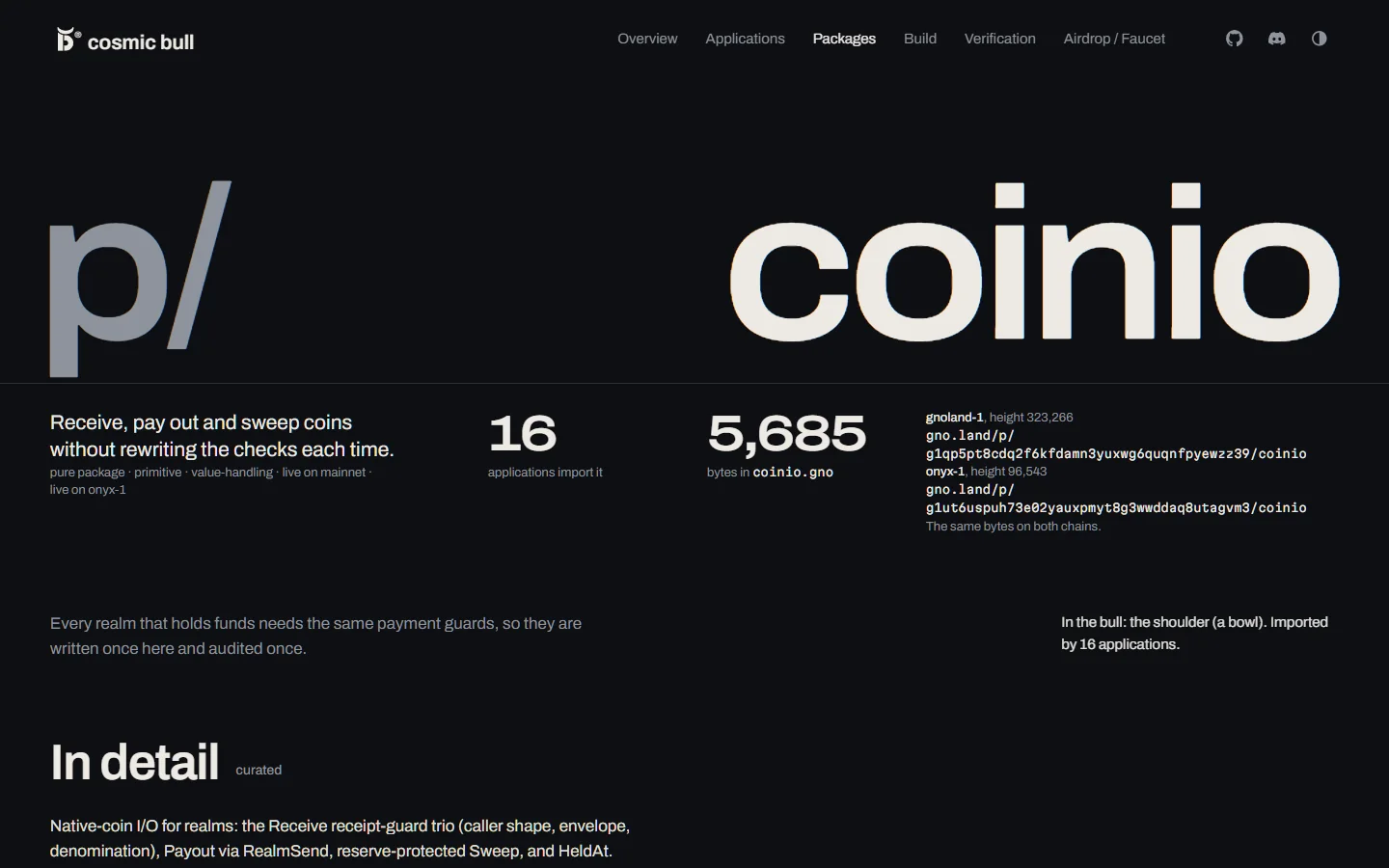
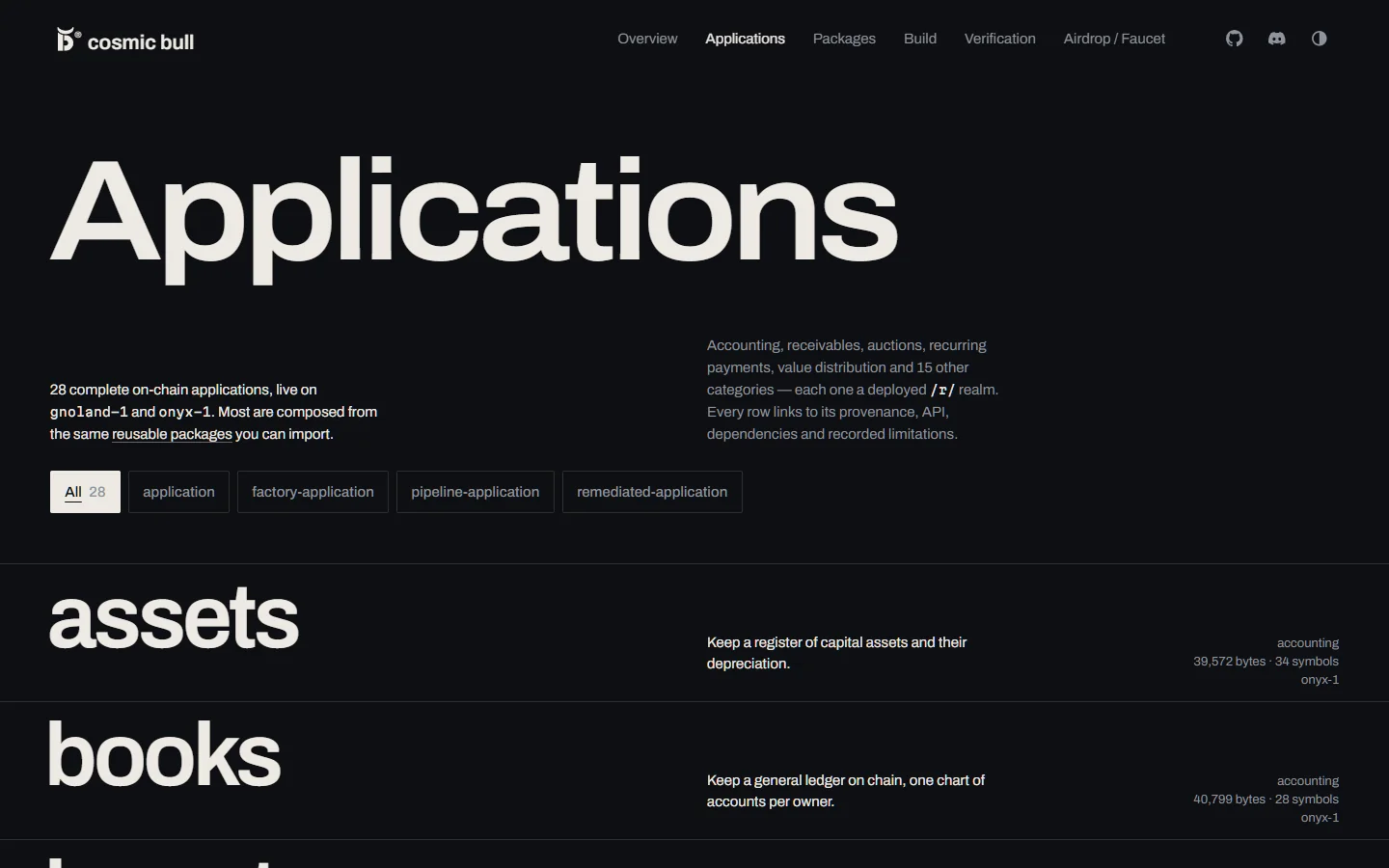
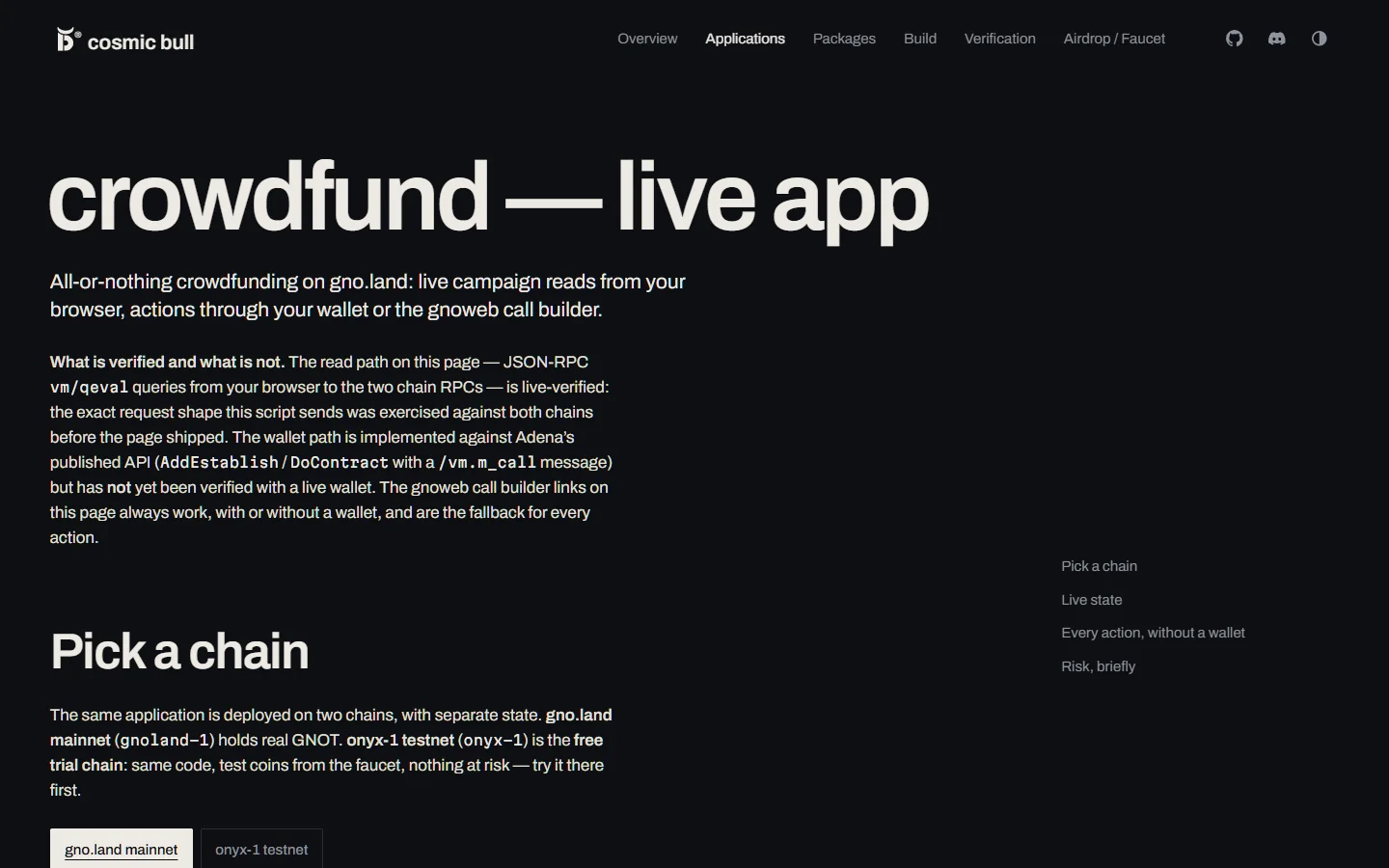
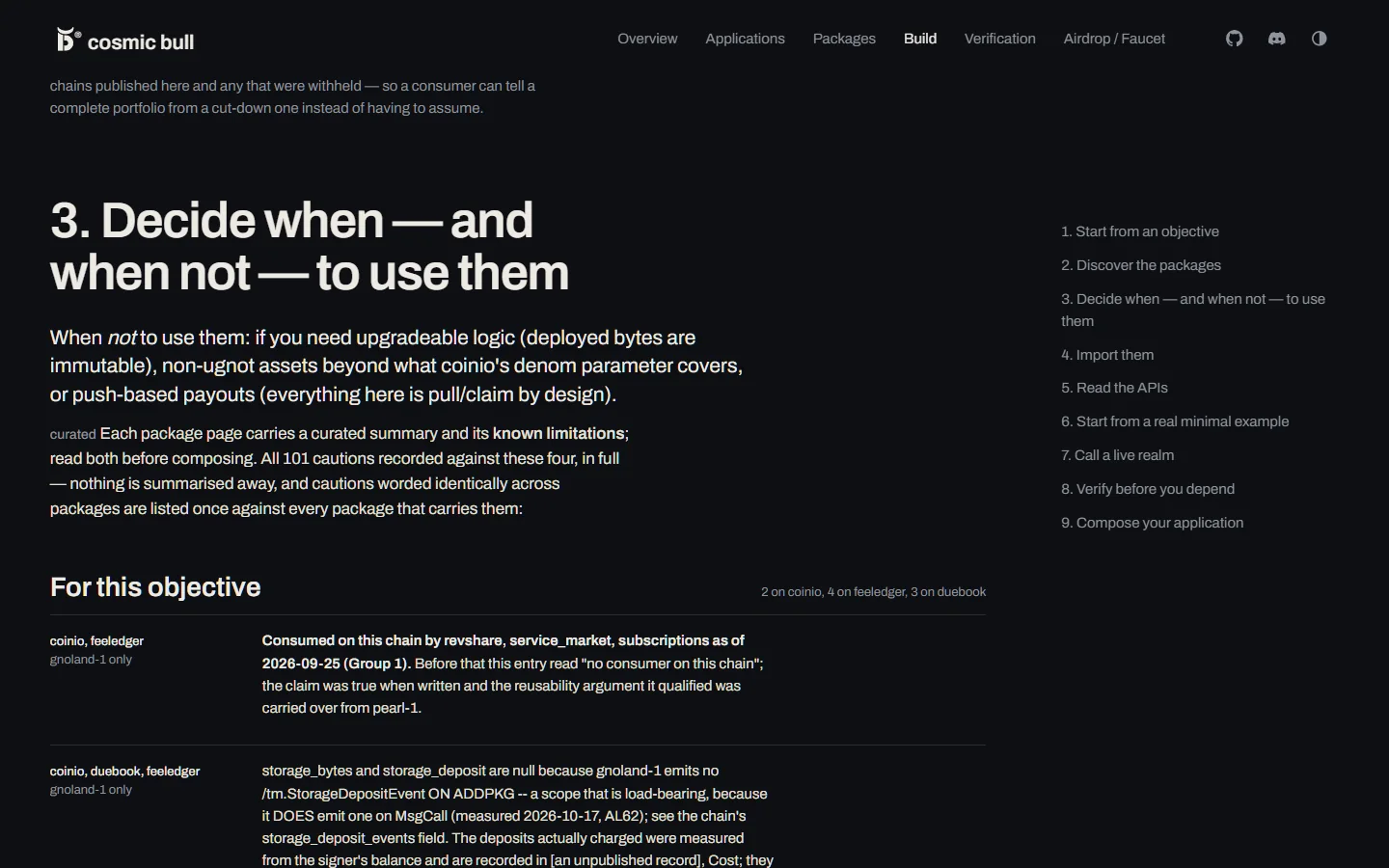
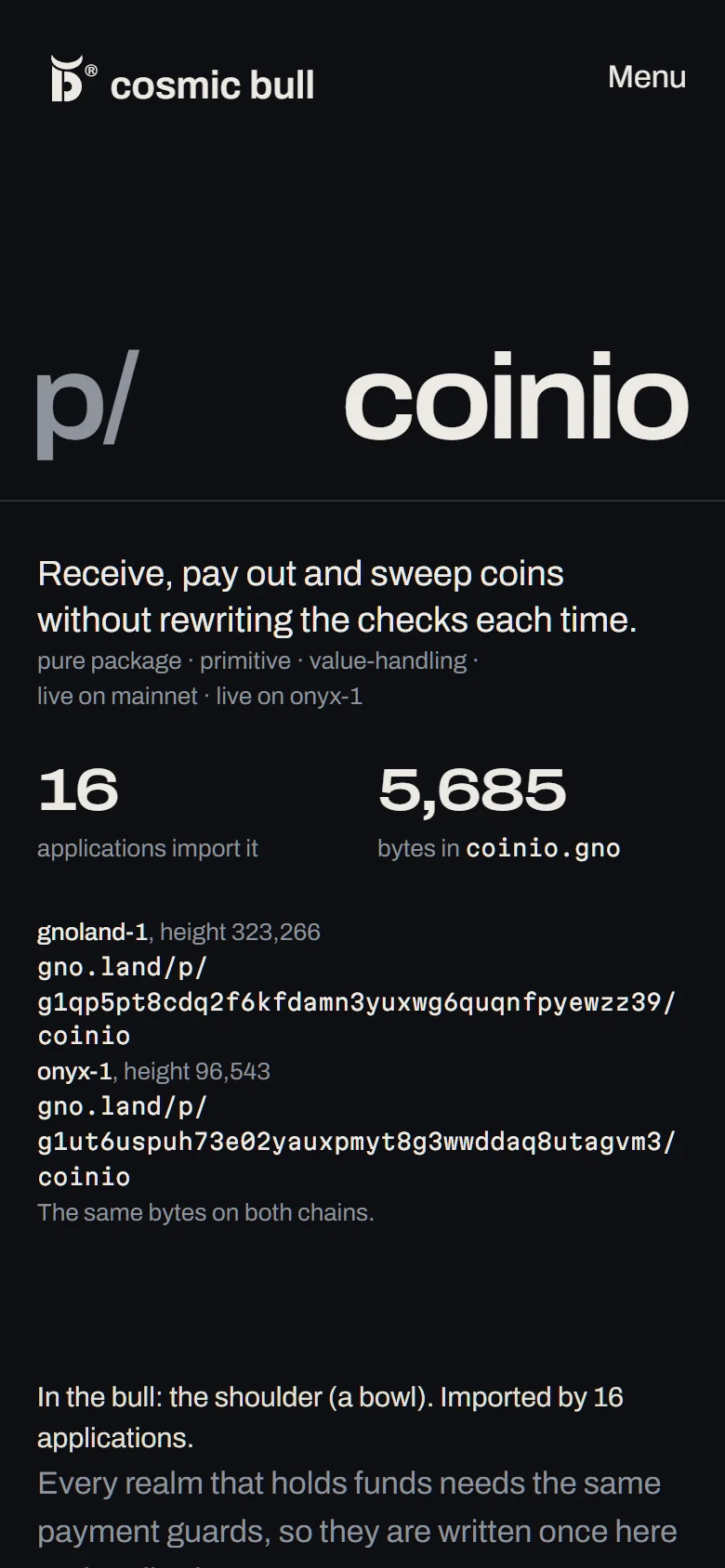
The site runs to 50 pages on eight templates, for every package and application. The client’s Build page ran to 27,391 px at 1440 on 24 October 2026. The redesign’s runs to 8,853 px: its 101 cautions moved into one ruled lattice with every word kept, 92 of them a click away.
The same proof on a phone.
At 390 px the digest breaks from two lines of 32 into four lines of 16 and stays at display size. The client’s Build page ran to 49,112 px on a phone on 24 October 2026; the redesign’s runs to 11,575 px.
Ink and bone.
Night is the default, day is a choice the site remembers. Ink #0E0F12 and bone #EDEAE3 carry almost everything. Hot orange, Aldebaran’s colour, stays under about 2 % of a frame, and red appears only for a real failure or a recorded divergence. Archivo sets all the type, Martian Mono only the code.
The redesign runs at a preview address and carries the client’s figures as of 24 October 2026. cosmicbull.net still serves the old site, and its figures have moved on since.