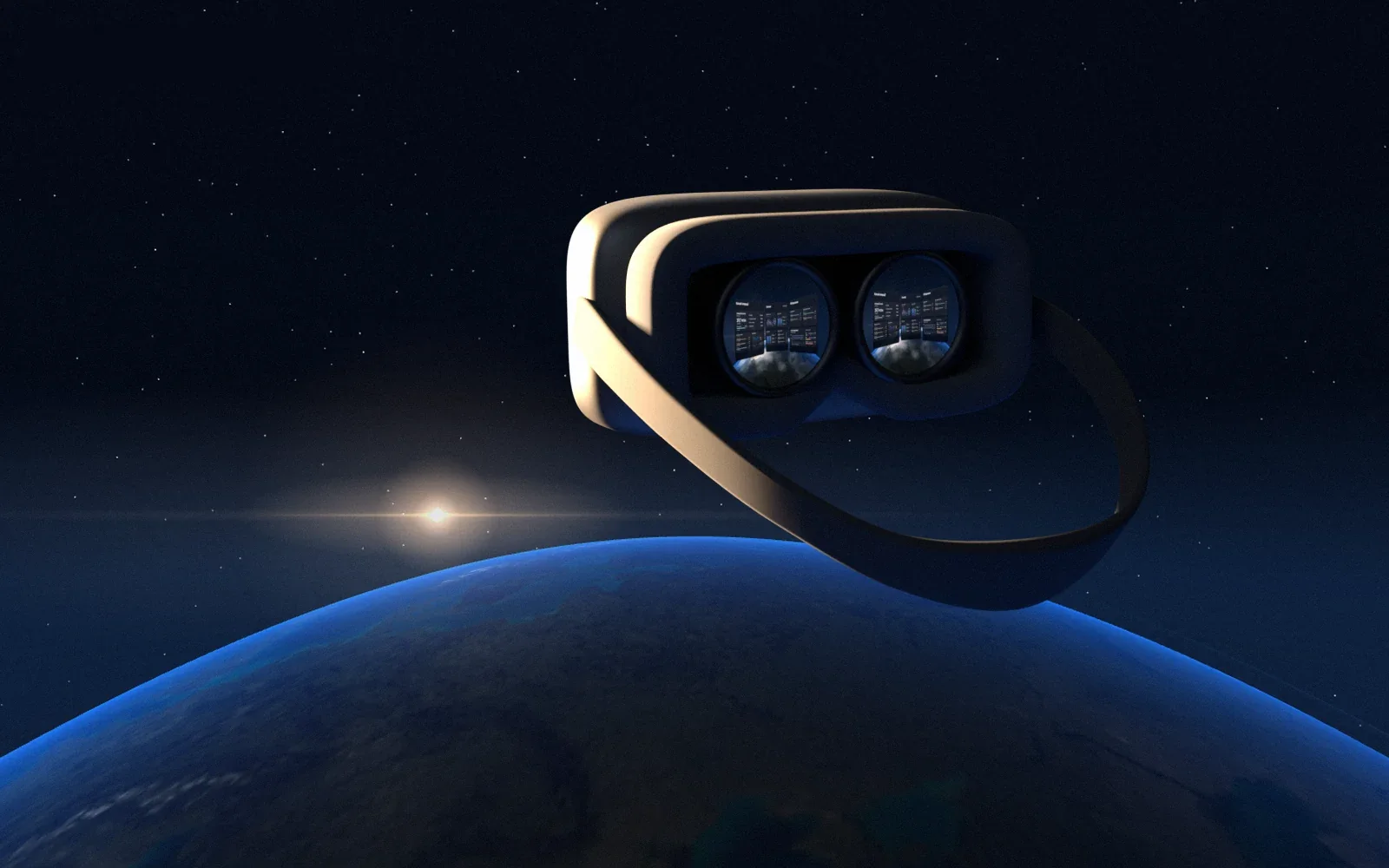
A department’s numbers, seen from orbit.
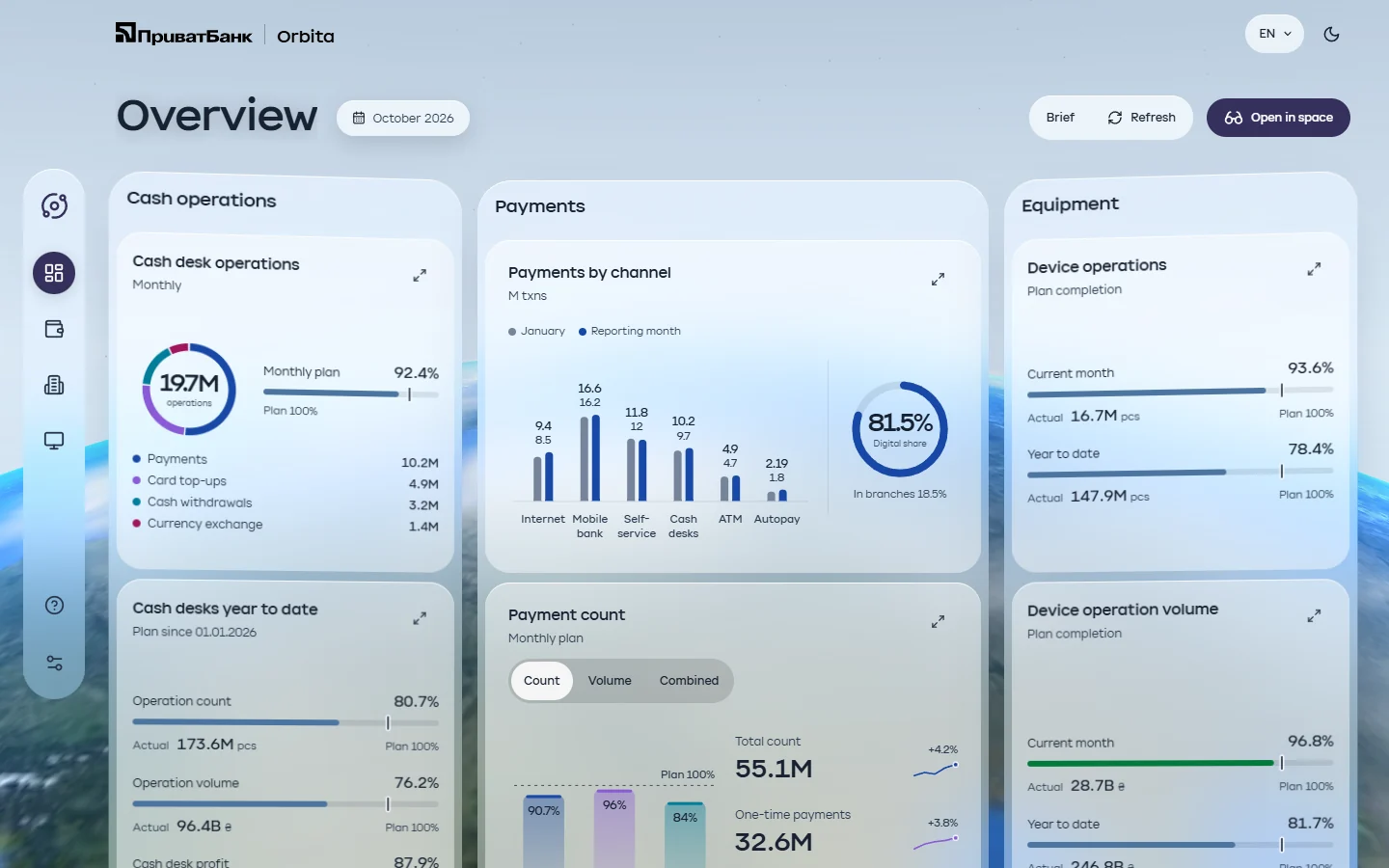
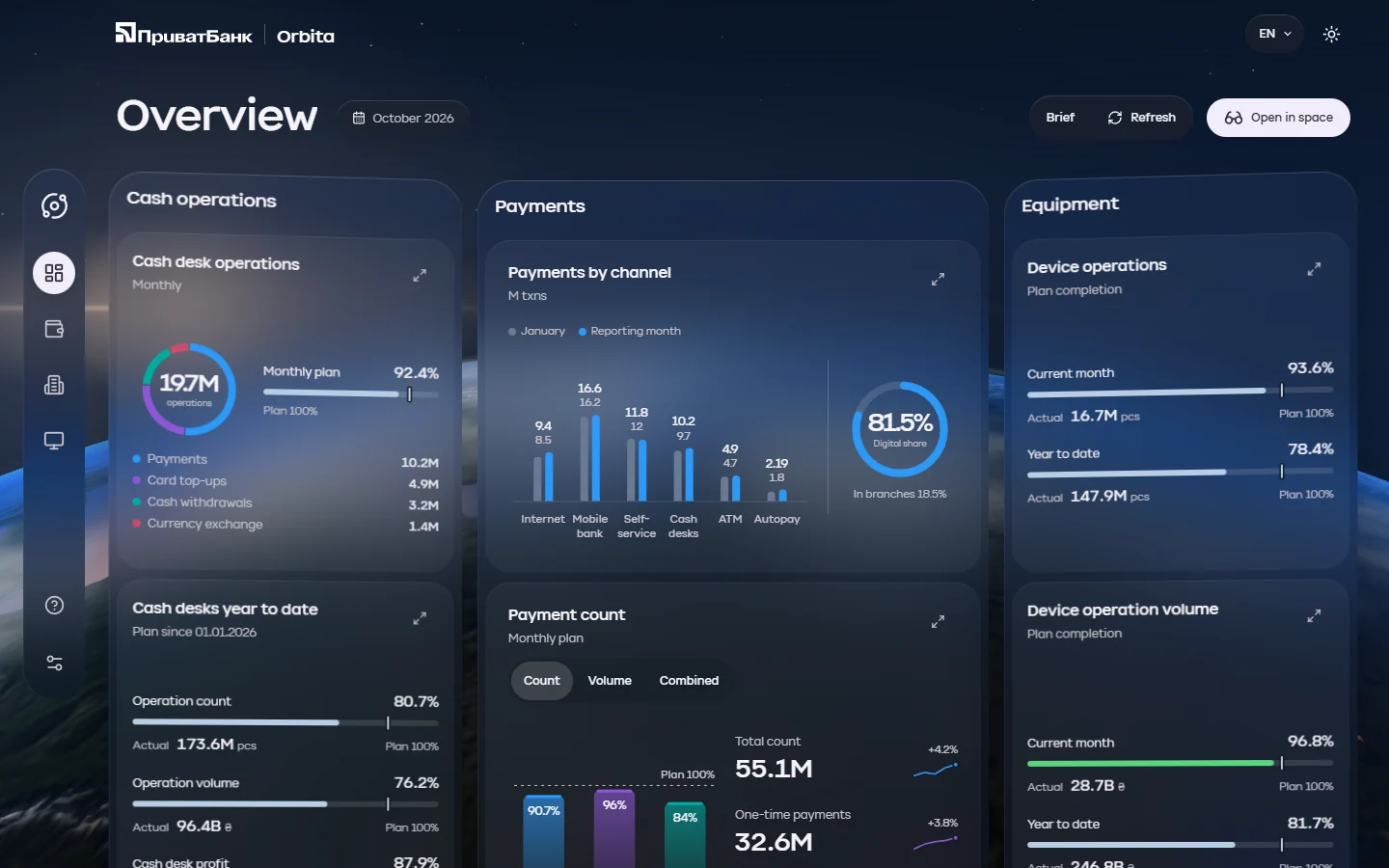
Orbita gathers the analytics of a PrivatBank department in one place: ten dashboards in three blocks, payments, cash desks, and the ATM, TSO and Recycle devices. I designed and built it as one interface for two places. In a browser it is a glass dashboard over the Earth from orbit; in Meta Quest 3S the same panels stand around you.
The brand stays quiet: the bank’s own mark and the product’s name, black in the light theme and white in the dark one, with nothing behind them.
Ten dashboards, nine places.
The overview is a three by three grid: cash desks on the left, payments in the middle, equipment on the right. Payment count and payment volume share one monthly card that switches between count, volume and both, so ten dashboards take nine places and each still opens on its own.
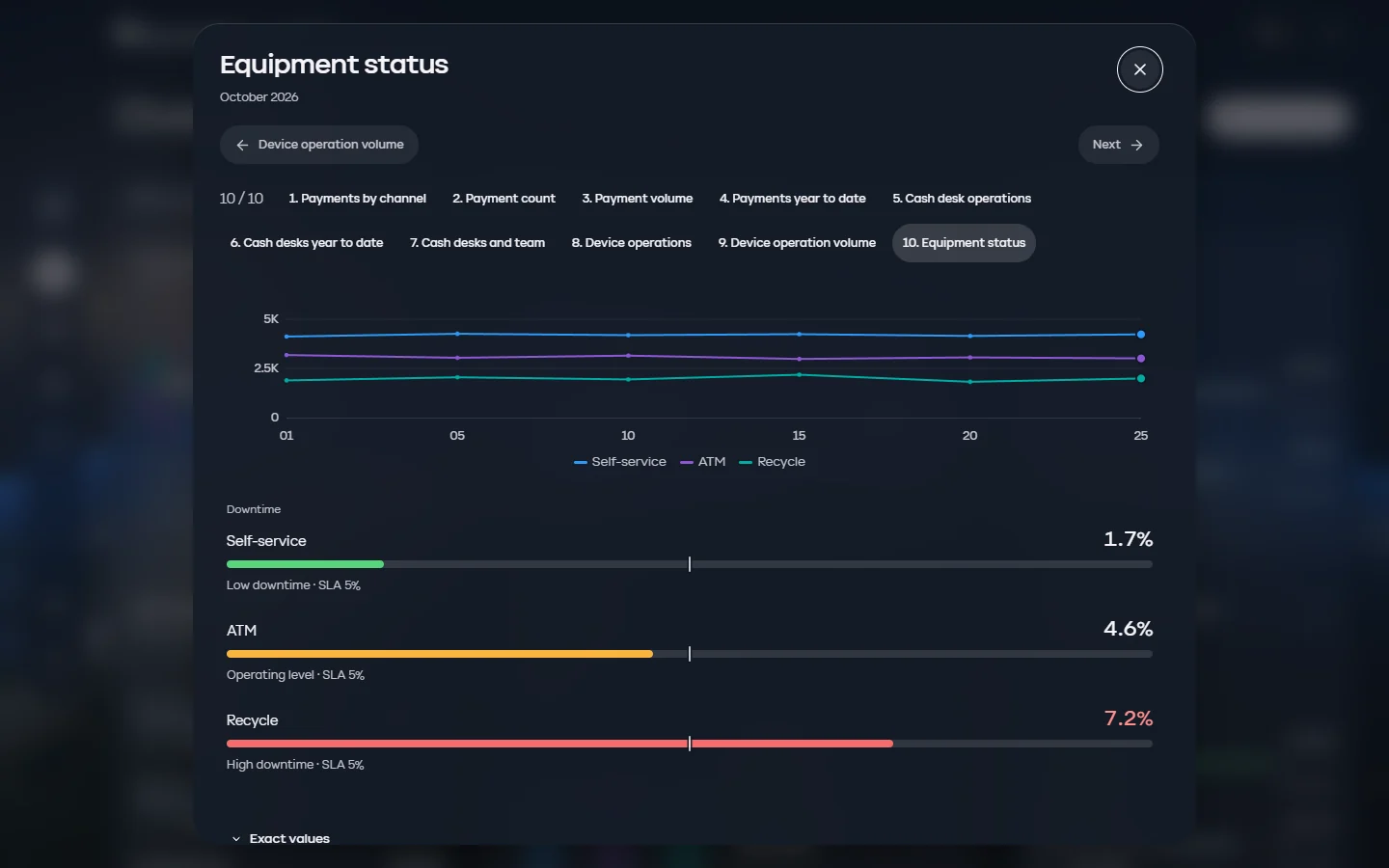
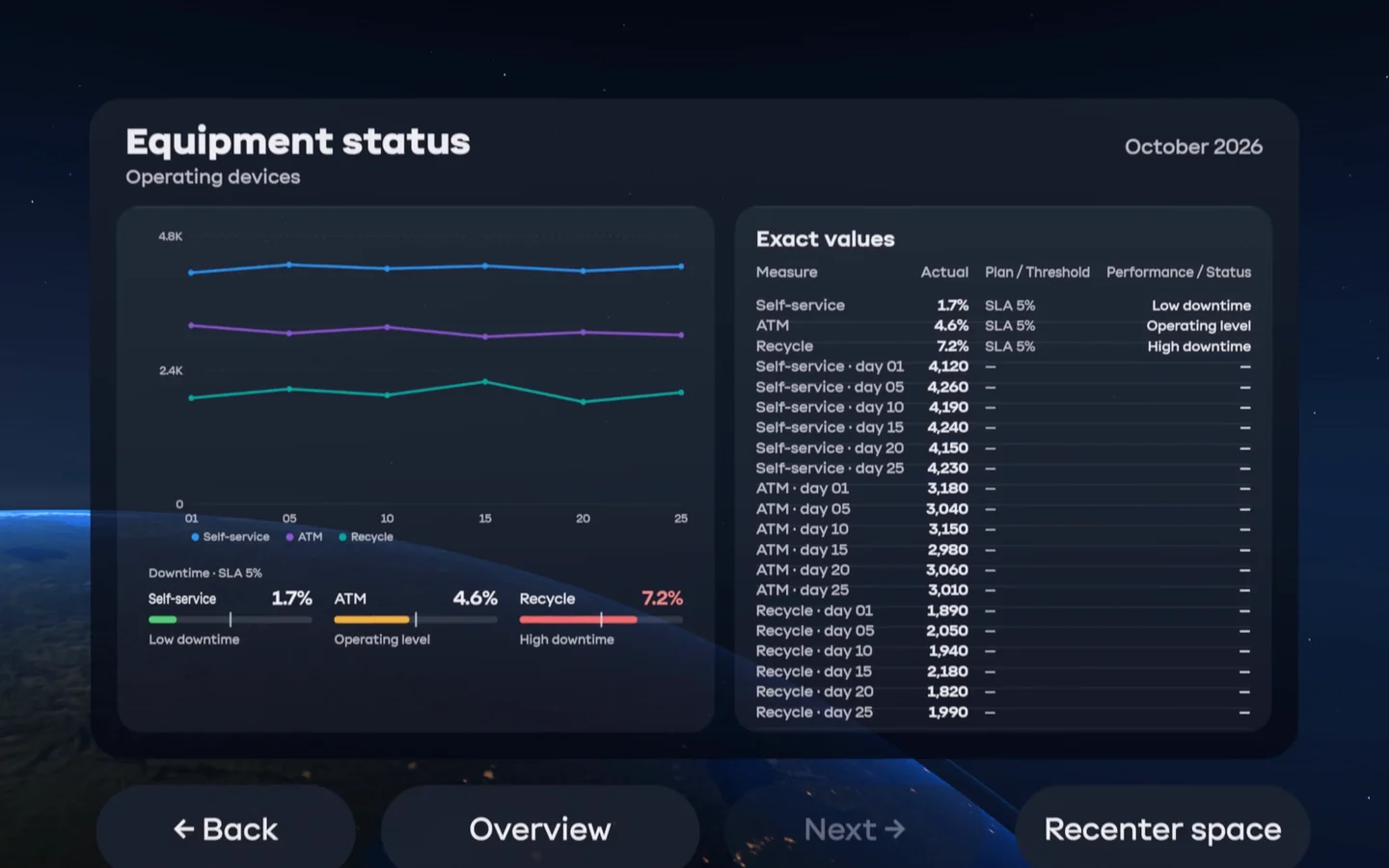
A chart and its exact values on one panel.
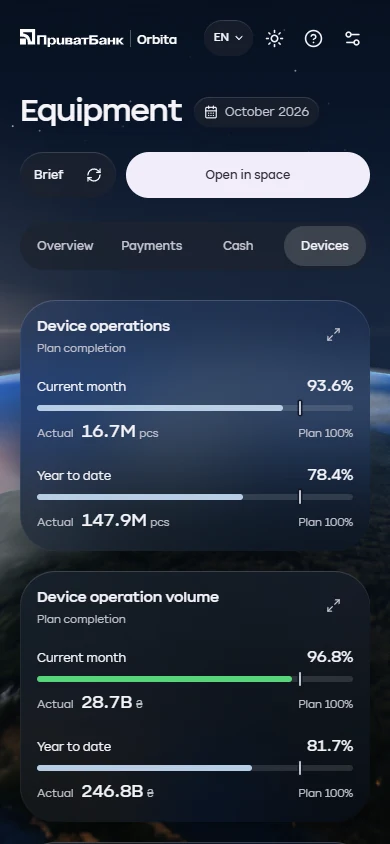
Any card opens in focus: the large chart and every exact value with its plan, threshold and status, on one panel instead of pages of tables. Downtime has its own scale, from 0 to 10 %, with the 5 % SLA marked on it, so 1.7 % reads as a short bar, not a full one.
The same stands, all around you.
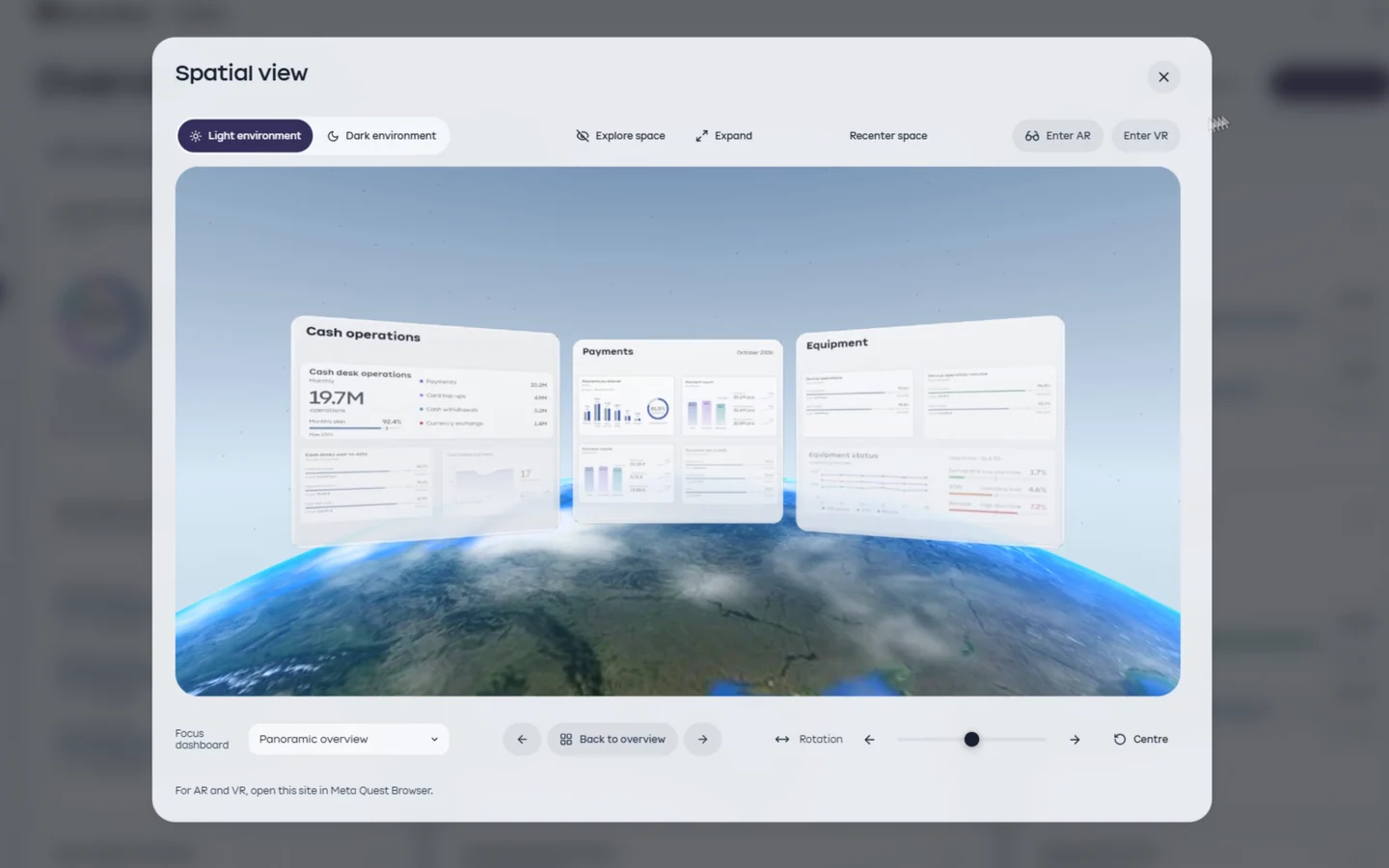
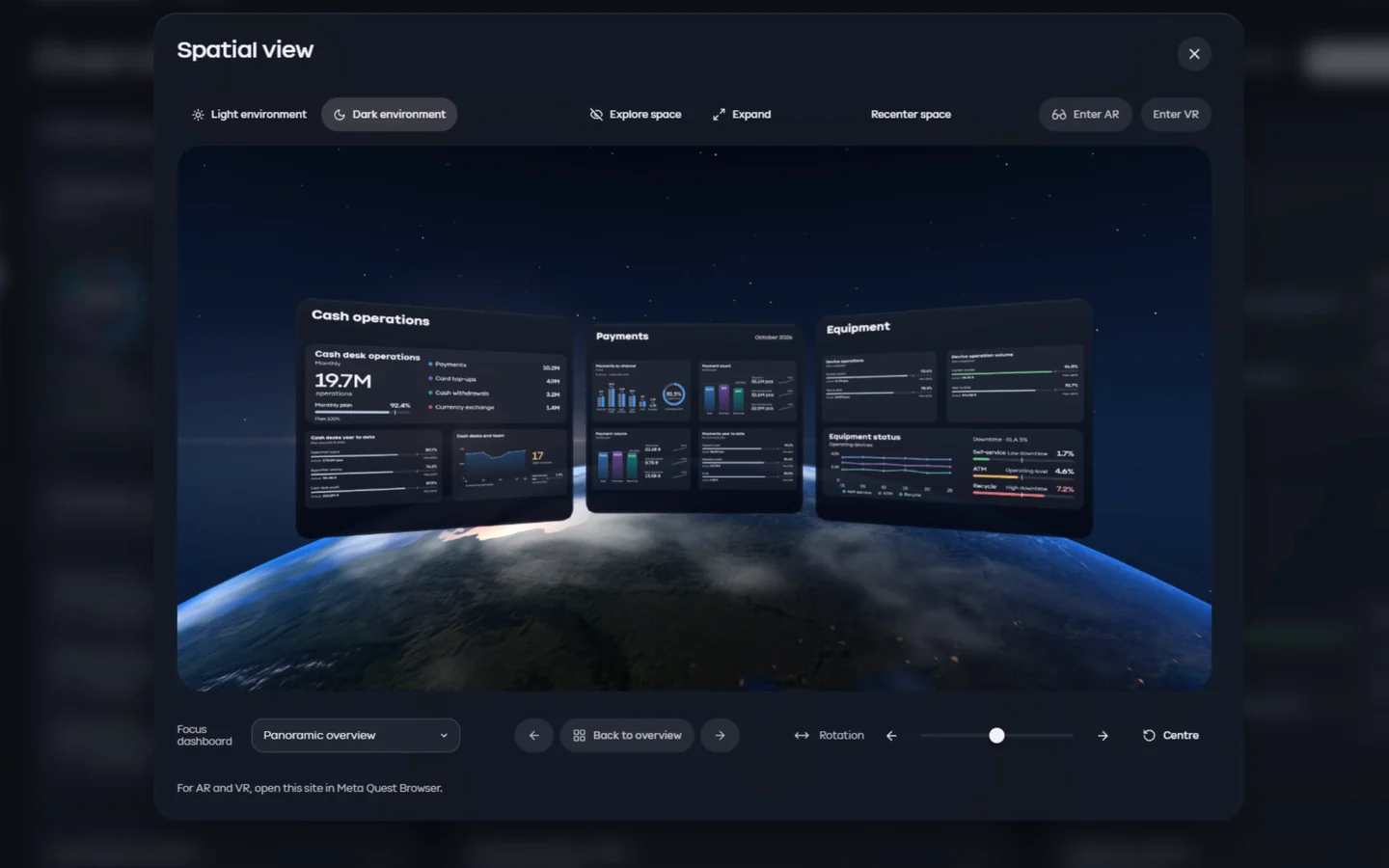
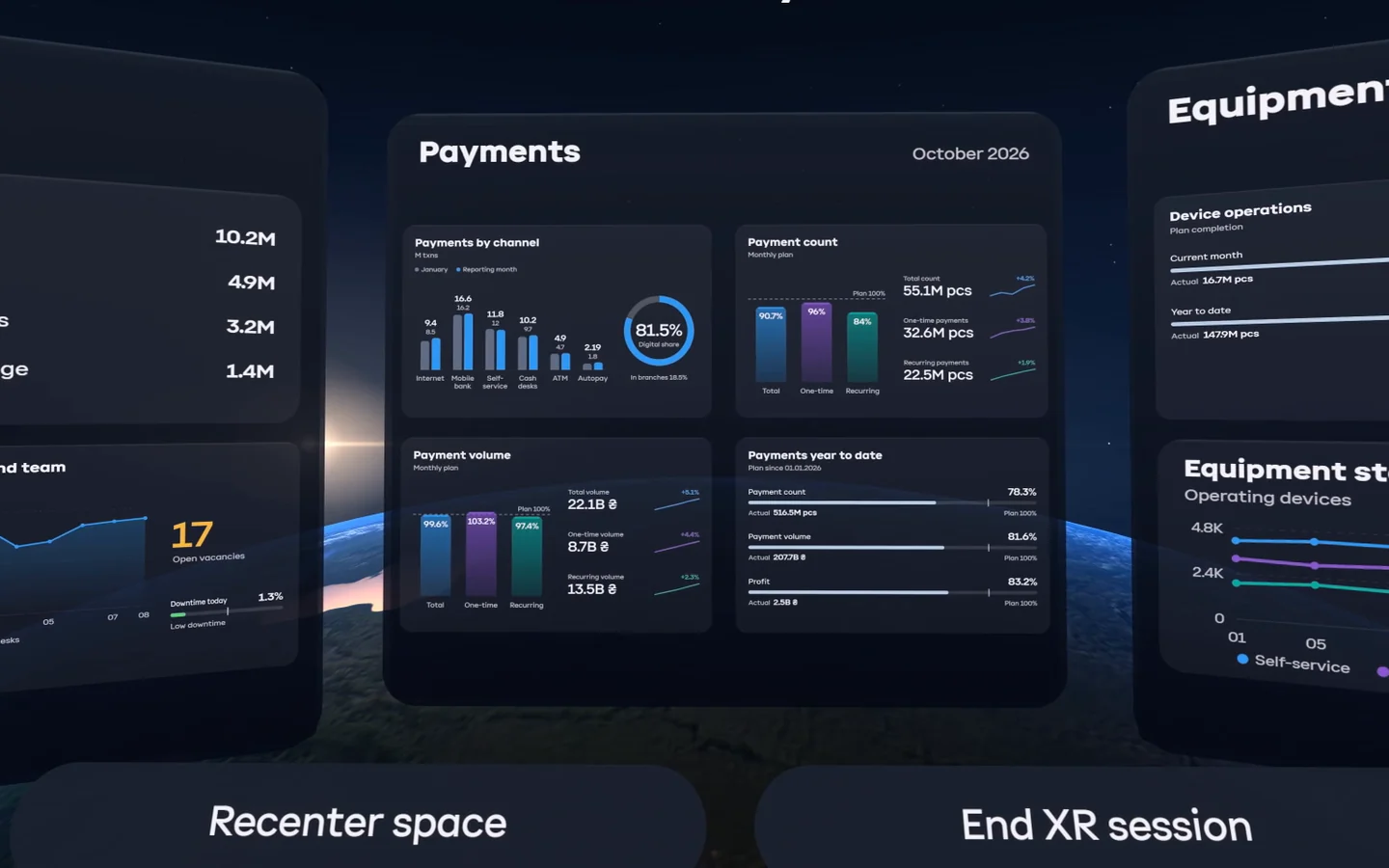
«Open in space» puts the three blocks on three stands along an arc, 1.85 m away, the side stands turned 24° toward you. In Meta Quest Browser the stands hang over the same Earth in VR, or in your own room in AR. Point the controller’s ray and pull the trigger, or pinch, and the card comes forward to 1.5 m.
On a phone.
On a narrow screen the blocks become tabs, and help and the data settings move into the header; every card still opens in focus.
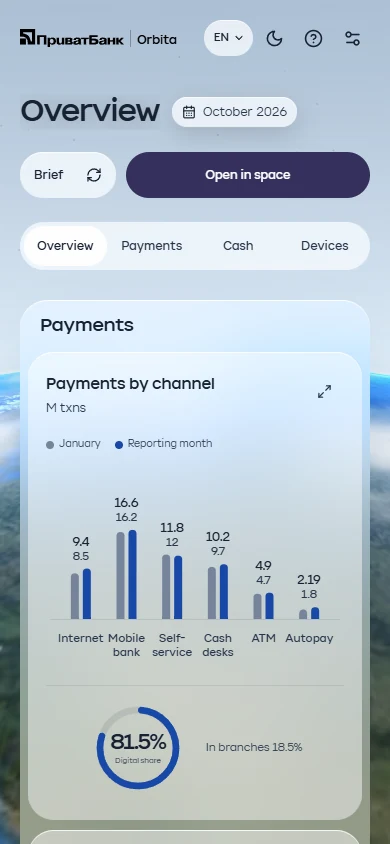
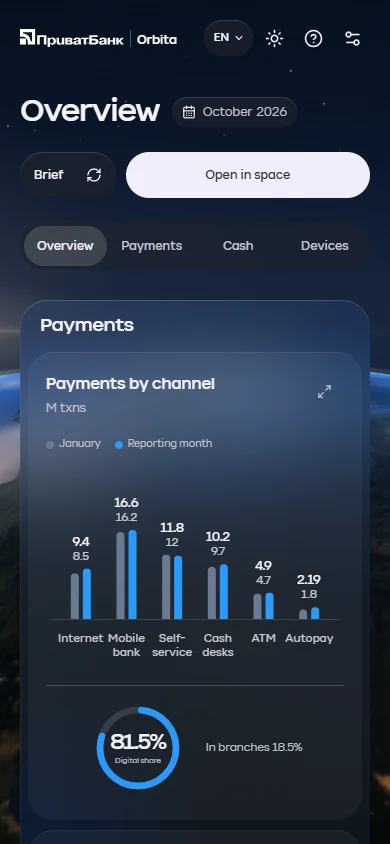
Built for a browser and a headset.
React and TypeScript on Vite, Three.js through React Three Fiber, and WebXR for VR and AR. The cards on the page and the panels in space read one data model, so a value, its unit and its colour match everywhere. Ukrainian by default, with English and Russian. It installs as an app and works offline on demo data; a live source connects by GET only, with schema checks, a timeout and an explicit fallback.
Every figure on these screens is demo data. A test on a physical Quest 3S and the bank’s live API are still ahead.